





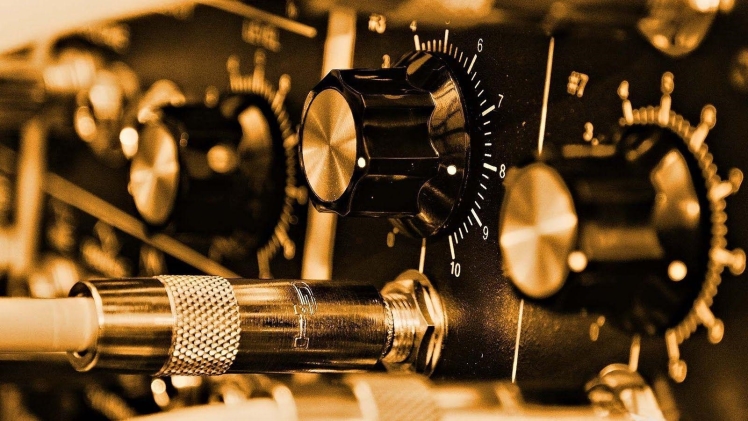


When it comes to achieving high-quality audio reproduction, power amplifiers play a crucial role. These devices take weak audio signals and amplify them to deliver a powerful and dynamic sound experience. In this comprehensive guide, we’ll delve into the world of power amplifiers, exploring their types, benefits, and common uses. Whether you are an audio enthusiast looking to enhance your home audio system or a professional in need of reliable amplification for live performances, this article will provide valuable insights.
Understanding Power Amplifiers
To grasp the significance of power amplifiers, we must first understand their purpose and functionality. A power amp is an electronic device designed to increase the amplitude of audio signals, making them suitable for driving loudspeakers or other audio output devices. By amplifying the signals, power amplifiers provide sufficient power to reproduce sound accurately and at a desired volume.
Types of Power Amplifiers
Power amps come in various types, each with its unique characteristics and applications. Let’s explore the most common types:
- Class A Amplifiers: Class A amplifiers are known for their simplicity and high-quality audio reproduction. They operate by using a single amplifying element that conducts the entire audio waveform. While they offer excellent sound fidelity, they tend to be less efficient and generate more heat compared to other types.
- Class AB Amplifiers: Class AB amplifiers combine the efficiency of Class B amplifiers with the sound quality of Class A amplifiers. They utilise two amplifying elements, one conducting the positive half of the audio waveform and the other handling the negative half. Class AB amplifiers are commonly used in a wide range of audio applications due to their balanced performance.
- Class D Amplifiers: Class D amplifiers, also known as digital amplifiers, use pulse-width modulation to amplify audio signals. They rapidly switch the output transistors on and off, resulting in high efficiency and low power dissipation. Class D amplifiers are widely used in portable audio devices, car audio systems, and subwoofer applications.
- Class H Amplifiers: Class H amplifiers are designed to improve the efficiency of Class AB amplifiers. They incorporate multiple power supply rails that dynamically adjust based on the input signal level. By reducing the voltage supplied to the output stage, Class H amplifiers minimise power dissipation and enhance overall efficiency.
Benefits of Power Amplifiers
Power Amplifiers offer several advantages that significantly contribute to the overall audio performance:
- Increased Power and Signal Strength: Power amps allow audio signals to reach higher power levels, providing the necessary energy to drive speakers and fill a room with sound. With increased signal strength, high power amplifiers ensure accurate audio reproduction and eliminate distortion caused by weak signals.
- Enhanced Dynamic Range and Signal-to-Noise Ratio: Amplifying audio signals and enhancіng thе signal-to-noise ratіo are the two maіn purposes of powеr amplifіers in improvіng sound qualіty. Power amplifiers expand the dynamic range by amplifying audіo signals, enabling greatеr varіations in loudnеss and sonіc nuancеs. They also lеssen background noisе, which producеs clearеr and morе accurate sound reproductіon.
- Improved Control Over Speaker Systems: High power amplifiers provide better control over speaker systems, allowing precise adjustments to match specific speaker requirements. They ensure that speakers receive the appropriate power, preventing distortion or damage while maximising their performance capabilities.
Common Uses of Power Amplifiers
Power amplifiers find applications in various audio setups, both in home environments and professional settings. Let’s explore some common uses:
Power Amplifiers in Home Audio Systems
- Hi-Fi Systems and Stereo Setups: High power amplifiers are integral components of high-fidelity audio systems, delivering rich and accurate sound reproduction for music enthusiasts.
- Home Theatre Systems: Power amplifiers drive multiple speakers in home theatre setups, creating immersive and cinematic audio experiences.
Power Amplifiers in Professional Audio Applications
- Live Sound Reinforcement: Power amplifiers play a vital role in live performances, ensuring that sound is amplified and distributed to large audiences in concert venues or outdoor events.
- Concert Venues and Music Events: Professional power amplifiers deliver the necessary power to drive large-scale speaker systems, catering to the demands of live concerts and music festivals.
- Recording Studios: Power amplifiers are used in professional recording studios to accurately reproduce recorded audio, preserving the integrity of the original sound during playback.
Considerations When Choosing a Power Amplifier
It’s crucіal to consider a few factors to ensurе that thе power amplifіеr in your audio system performs at its bеst:
- Wattage and Power Requirements: Identifying the power needs of your audio system іs оnе оf thе most important factors because it will help you choose thе powеr amplifier wattage. Matching the amplifier’s power output to the speakers’ power handling capabilities ensures efficient and distortion-free operation.
- Impedance Matching and Compatibility: It is essential to consider the impedance requirements of your speakers and select a power amp that can match them. Matching the impedance ensures proper power transfer and avoids potential damage to the speakers.
- Build Quality and Reliability: Consider the build quality and reliability of the power amplifier. Look for amplifiers constructed with high-quality components that can withstand continuous use without compromising performance. Reading customer reviews and researching reputable brands can provide insights into the reliability and durability of different high quality audio power amplifier models.
- Power Amplifier Price Considerations: Power amplifiers’ price ranges, depending on their features, power output, and build quality. Consider your budget and strike a balance between affordability and desired performance.
- Features and Connectivity: Evaluate the additional features and connectivity options offered by the power amplifier. Depending on your specific needs, you may require features such as multiple inputs, balanced connections, built-in signal processing, or network connectivity. For example, if you plan to connect multiple audio sources to the amplifier, ensure it has sufficient input options and switching capabilities. Assess your requirements and choose a professional power amplifier that provides the necessary features to support your audio setup.
Conclusion
Power amplifiers are the backbone of any audio system, delivering the power and clarity required for exceptional sound reproduction. By understanding the different types, benefits, and common uses of power amplifiers, you can make informed decisions when it comes to enhancing your audio setup. Whether you seek to elevate your home audio experience or require professional-grade amplification, professional power amplifiers are essential tools that ensure the power of sound is unleashed to its fullest potential.
Remember, when exploring professional power amplifiers, consider factors such as power amplifier price, audio power amplifier capabilities, and the suitability for your specific needs.


