





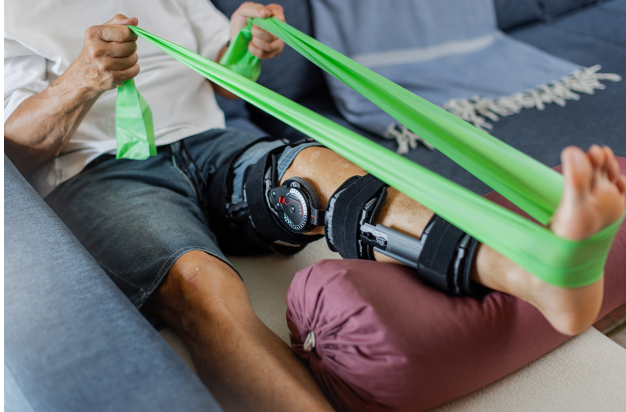


Surgery is only the beginning. What happens in the weeks and months after a knee replacement is what actually determines how well someone moves, how quickly they regain confidence, and how much function they get back long term. Exercise is at the center of all of it.
At Total Performance Physical Therapy, we work with patients through every stage of recovery. The right movements at the right time make an enormous difference. The wrong ones, or doing too much too soon, can set things back. Here is what we typically guide people through and why it matters.
Why Exercise Matters More Than People Expect
A lot of patients assume rest is the priority after surgery. In reality, staying still too long is one of the bigger risks. Without movement, scar tissue builds up, the joint stiffens, circulation slows, and the muscles around the knee weaken from disuse.
Gentle, progressive exercise does the opposite. It keeps blood moving, reduces swelling, rebuilds muscle strength, restores walking mechanics, and protects the new joint over time. Physical therapy after knee replacement is not optional for good recovery. It is the recovery.
When Does Exercise Actually Start
Earlier than most people expect. Gentle movement often begins within the first day or two after surgery. These early exercises are simple and controlled, but they serve a real purpose in keeping the joint from seizing up.
How quickly someone progresses depends on pain levels, swelling, and how the knee is responding to load. Pushing too fast creates setbacks. Moving too cautiously delays recovery. Finding the right pace is exactly what post knee surgery rehab in Hatfield is designed to do.
Early Exercises We Start With
In the first days and weeks, exercises after knee replacement focus on basic activation and gentle range of motion. The goal is reminding the body how to use the knee again without overloading it.
We commonly start with ankle pumps to keep circulation going, quad sets where the patient gently tightens the thigh muscle without bending the knee, glute squeezes, heel slides along a flat surface, and straight leg raises. These look simple. They are doing important work underneath.
Building Strength as Recovery Progresses
Once the early stage is stable, we shift toward rebuilding the strength that supports the knee through daily movement. Seated knee extensions help restore control through the full range. Mini squats with support begin reloading the joint safely. Step-ups, standing hamstring curls, and sit-to-stand practice rebuild the functional strength someone needs to move through their day without compensating.
We pace this carefully. Knee replacement physical therapy in Horsham follows a progression that matches where each patient actually is, not a generic timeline.
Mobility and Flexibility Work
Here is something we remind patients often: a strong knee that cannot fully bend or straighten is still a limited knee. Strength and range of motion have to develop together, and for many people, flexibility takes more deliberate work than strength does.
Gentle knee bending exercises, calf stretches, hamstring stretches, and assisted range of motion work all help the joint move through its full arc again. Tightness that is not addressed early has a way of becoming a long-term limitation.
Low-Impact Activities That Support Recovery
Getting stronger in the clinic is one thing. Actually feeling capable again in daily life is another. That gap is where low-impact activity comes in. As patients progress, we start building endurance and real-world confidence alongside the structured exercise work.
Walking is the cornerstone. Short, consistent walks do more for recovery than people give them credit for. Stationary cycling moves the knee through a controlled range while building fitness without impact. Swimming, once the incision is fully healed, is excellent for the same reason. Knee recovery exercises in Harleysville often incorporate these activities as part of a broader return to daily function.
What to Avoid Too Soon
Deep squats, running, jumping, twisting under load, and high-impact sports all place more demand on the joint than early healing tissue can handle. These are not permanent restrictions for most patients. They are timing issues. The body needs to earn back those demands gradually.
Signs an Exercise May Be Too Much
Pay attention to how the knee responds after exercise, not just during it. Increased swelling, sharp pain, warmth that lingers for hours, or reduced motion the following day are all signals to pull back and reassess.
How We Guide the Process
Knee replacement physical therapy in Horsham at Total Performance Physical Therapy is built around individual progression. We correct gait compensations before they become habits, track strength gains, address balance, and work on the functional movement patterns that signal someone is genuinely ready for daily life.
Post knee surgery rehab in Hatfield and knee recovery exercises in Harleysville follow the same principle: meet the patient where they are, progress them deliberately, and make sure every step forward is a step that sticks.
Physical therapy after knee replacement gives patients a clear path forward. One where every step is supported, and recovery actually feels like it is moving in the right direction.


