





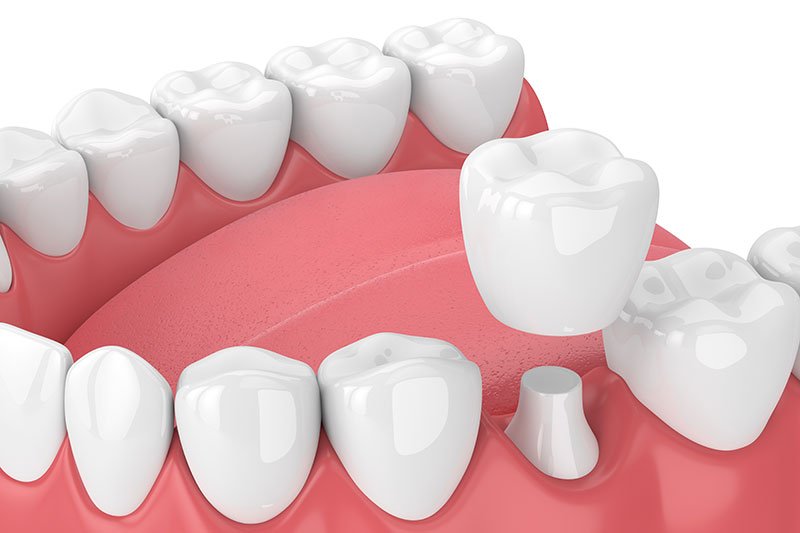


An effective and popular way to restore an aesthetic smile is the installation of crowns. They are designs that completely imitate a native lost or damaged tooth.
Dental crowns are classified according to the materials they are made from. Durable, translucent, and hypoallergenic zirconium products are in demand worldwide.
Zirconia crowns: features and benefits
Modern zirconium crowns are one of the latest developments in the prosthetics field. Such designs combine a zirconium frame and an outer coating made of porcelain enamel.
The advantages of zirconia prostheses include:
- Constructions can be placed not only on incisors but also on chewing teeth. Their strength is 30 times greater than that of ceramic products.
- The minimum thickness. For ceramic prostheses, this figure is from 1.5 to 2 mm, and for zirconium crowns, it is about 0.4 mm. Due to this, the degree of tooth grinding and the risk of developing inflammation is reduced.
- The disadvantage of metal-containing crowns is a high probability of prosthesis rejection and allergic reactions. Unlike them, zirconium tooth crownsare hypoallergenic and biocompatible.
- Such prostheses match the natural enamel color and look the same regardless of the lighting. Also, they are not stained with food coloring and do not oxidize.
Read more about the characteristics and cost of zirconium crowns on the website https://dentistdowntownmiami.com/services/tooth-crown/.
When should crowns be placed?
Like any other medical manipulation, the installation of zirconium dental crowns in Brickell Dental has clear indications. The prosthesis returns the jaw not only aesthetics but also impaired functionality. The need for it arises in the following situations:
- More than 50% tooth decay;
- Fast erasing of enamel;
- Diastema and trema;
- The absence of one or more teeth in the dentition;
- Structural anomalies of the jaw;
- Light or moderate tooth mobility;
- Violation of the tooth shape, color, or size, causing discomfort;
- Traumatic injuries with violation of integrity and function;
- Non-carious lesions as a result of increased fluoride content in water;
- Protection of almost destroyed teeth.
For crowns to last as long as possible, you need to follow simple rules for care. Patients should chew solid food gently, brush their teeth thoroughly regularly, and use dental floss or an irrigator.
Conclusion
Prosthetics using crowns is an affordable and popular way to get rid of the discomfort associated with tooth decay due to disease or injury. An experienced dentist will help you choose the prosthesis material and advise on further care and monitoring.


