





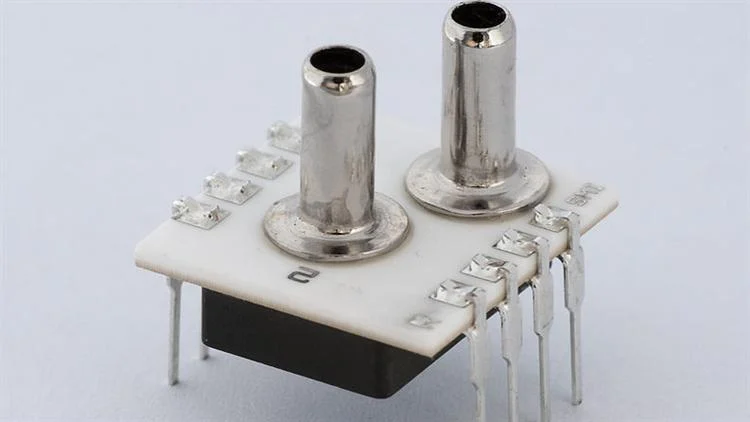


Industrial processes are mostly hinged on pressure systems, from the hydraulics and piping networks to the oil and gas industries. While there are plenty of pressure sensors to choose from, you are going to be stuck between options of the differential and other pressure sensors. While their joint function measures pressure ranges, their operation and use areas may vary. Read on for more on the differences.
Differential Pressure Sensors
Differential pressure sensors obtain pressure readings based on the difference between the two parts. They use a sensor element that detects the variations and turn the change reading into an electrical signal for interpretation. They are highly sensitive and compatible with fluid varieties.
Other Pressure Sensors
Differential pressure sensors are just one type of pressure sensor available, and other pressure sensors, such as absolute pressure sensors or gauge pressure sensors, are better suited for different applications.
Absolute pressure sensors measure pressure relative to a perfect vacuum, while gauge pressure sensors measure pressure relative to atmospheric pressure. Each type has its own specific use cases and advantages.
Static pressure sensors for instance are purported for absolute pressure readings or gases at rest. The sensor equipment responds to pressure variations and generates a corresponding electrical signal. Despite their shorthand on precision, they are stable, can resist corrosion, and remain tough in all conditions.
What are the Key Differences between Differential and other Pressure Sensors?
You may have noticed that both sensors are good when it comes to pressure readings, but some aspects still set them apart. Check out below;
Operation and Sensing Criteria
Differential pressure sensors from MicroSensor work mainly by comparing the variation between two pressure points. However, other pressure sensors like static and gauge only measures absolute pressure within a single unit or relative atmospheric pressure. This means their accuracies are weighed on different scales of either absolute pressure or pressure variations.
Differential Pressure Sensors: Applications and Advantages
Differential pressure sensors are deployed in HVAC systems to evaluate the filter condition and keep tabs to ensure optimal performance. On the other hand, they may also be applied in industrial processes where they monitor pressure fluctuations on filters, tank fluid levels, and pipeline networks.
Lastly, they can be utilized in medical equipment. Here they monitor infusion pumps’ blood pressure, airflow, and fluid level.
What Are the Benefits of Differential Pressure Sensors?
Differential pressure sensors are highly accurate thanks to their ability to monitor subtle changes in pressure. Additionally, you may use them on different applications, as mentioned in the section above. Their real-time monitoring and continuous measurements also help to thwart disastrous events and losses before they happen.
Other Pressure Sensors
Besides differential pressure sensors, your operation may find the purpose of the pressure sensors below.
- Strain Gauge: Measure strain in a diaphragm to convert it into an electrical signal for pressure measurement.
- Capacitive: Measure capacitance changes caused by pressure to determine the pressure level.
- Piezoresistive: Detect changes in electrical resistance due to pressure for accurate pressure measurement.
- Piezoelectric: Generate electrical charge in response to pressure, enabling pressure measurement.
- Optical: uses optical phenomena to measure pressure changes, often using fiber-optic or MEMS technology.
- Resonant: Measure pressure by monitoring changes in resonant frequency of a sensing element.
- Thermal: Detect changes in thermal properties induced by pressure to measure pressure.
- Absolute: Measure pressure relative to a perfect vacuum.
- Gauge: Measure pressure relative to atmospheric conditions
How to Choose the Right Pressure Sensor?
Differential pressure sensors will suffice when your application requires you to obtain pressure readings between two points. On the other hand, if it’s the fixed pressure point readings or absolute pressure you are dealing with, you should opt for static and absolute pressure sensors.
You need to inspect the work environment of your pressure sensor. The factors to consider may include temperature, contaminants, and corrosive substances. Differential pressure sensors are normally built to withstand these conditions without downgrading accuracy or performance.
Lastly, environmental factors may affect your choice. Mere occurrences such as vibration or humidity may require a resilient pressure sensor.
Remember, non-differential pressure sensors may have resistance to humidity or vibration, but they won’t serve in place of differential pressure sensors. So, you must ensure the pressure sensor you buy is constructed with features that can help it work optimally in such conditions.
Wrap Up
The differential pressure sensor works on pressure differences between two points, while non-differential or other pressure sensors whether gauge, resonant, piezoresistive or Piezoelectric are designed for absolute temperature. In the long run, they all measure pressure, but their field of application is just different. However, if you are stuck between the two choices, call us at MicroSensor for guidance.


