







Sometimes, we see things through a tunnel and our vision is delimited. When actually, things are much bigger than that.
Unconsciously, we may glance at people swiftly passing by, riding an electric scooter and for a brief moment, our thoughts drift to, “wow, the best electric scooter sure is fast!” And then a different stream of impressions enter our mind. “But how fast can it go?”, “Is it safe?”, “How durable is the electric scooter?” “Perhaps it is expensive.” “I hope I can afford one and then I can get away from the traffic…”
Just as the idea has sprung, it quickly blurs, distracted by other goings-on within our peripheral The wistful thought is altogether dismissed.
Now, herein is a macro, large-scale overview on the benefits, impact, relevance of electric scooters and how our transportation options are influenced, as necessity sees a salvo.
It didn’t take long actually for the electric scooter to be taken seriously, no longer presumed as a big guy’s toy, or a craze that’s going to fade. The Kiwis are waiting for something to ease their travel discontent.
An e-scooter is now perceived, and grudgingly accepted even by the dissenters, as the solution to the daily unbearable road congestion. And the perception is right. Because electric scooters are about the size of an average pedestrian, they can easily navigate every path, including bike lanes and sidewalks. They can quickly bypass vehicles on a standstill due to exasperating traffic jams. Although a regular electric scooter has a range of 15 to 25 miles per hour, it beats the hassle of having to stop every few minutes in heavy traffic.
Various sources of information estimated that today, there are at least 100,000 people who use electric scooters in New Zealand, whether privately owned or shared. Proof that the e-scooters are functional, useful, helpful and relieves the commuter of unwanted ordeals caused by mounting traffic build up. This number of e-scooterists as they are called may vary, depending on the season, location, availability, road regulation, and preference of electric scooter users for a particular travel/activity.
Good raves confirm the observation that electric scooters are doing their part to help solve the current transport problems in New Zealand by providing a convenient, fun, and flexible way of traveling around the city.
Yes, indeed, the e-scooter has paid its dues as this century’s latest inno-ventive future transport mode — helping reduce commuters’ travel woes, alleviate environmental concerns, be less dependent on fuel and thus, save on rising costs. The means is simple and achievable.
Like a thorn painfully stuck in one’s finger, commuters want to be rid of the perennial traffic congestion, the stressful parking issues, and health hazards of greenhouse gas emissions.
The doable answer is to ride an electric scooter instead of a car, especially if it’s just for short distances. What’s more, e-scooters can also support the further development of a more sustainable and resilient transport system that is less dependent on fossil fuels.
Another upside to riding electric scooters in New Zealand is that they also improve the mobility of people who, otherwise may not have access to other modes of transport, such as public transit, bicycles, even cars. Riding an e-scooter helps the person gain quick and easy access to important errands, attend classes or meetings on time – no longer at the mercy of insufferable traffic.
Concerned observers, though, may contend that there are purported challenges and risks that riding electric scooters pose, but such cannot outweigh the manifold benefits of the rideables as a safe and convenient alternative mode of transport in New Zealand.
While it is a given that electric scooters can cause safety hazards for riders and pedestrians when riding on footpaths where they are not regulated or enforced, mishap is often caused by the rider’s neglect, recklessness, irresponsibility. Not to be discounted too, is the lack of insufficient infrastructure and adequate facilities to ensure the safety of both e-scooter riders and pedestrians.
Conversely, rented e-scooters create clutter and obstruction on public spaces frequently when they are strewn just anywhere or are not parked properly. This causes injuries or accidents as well.
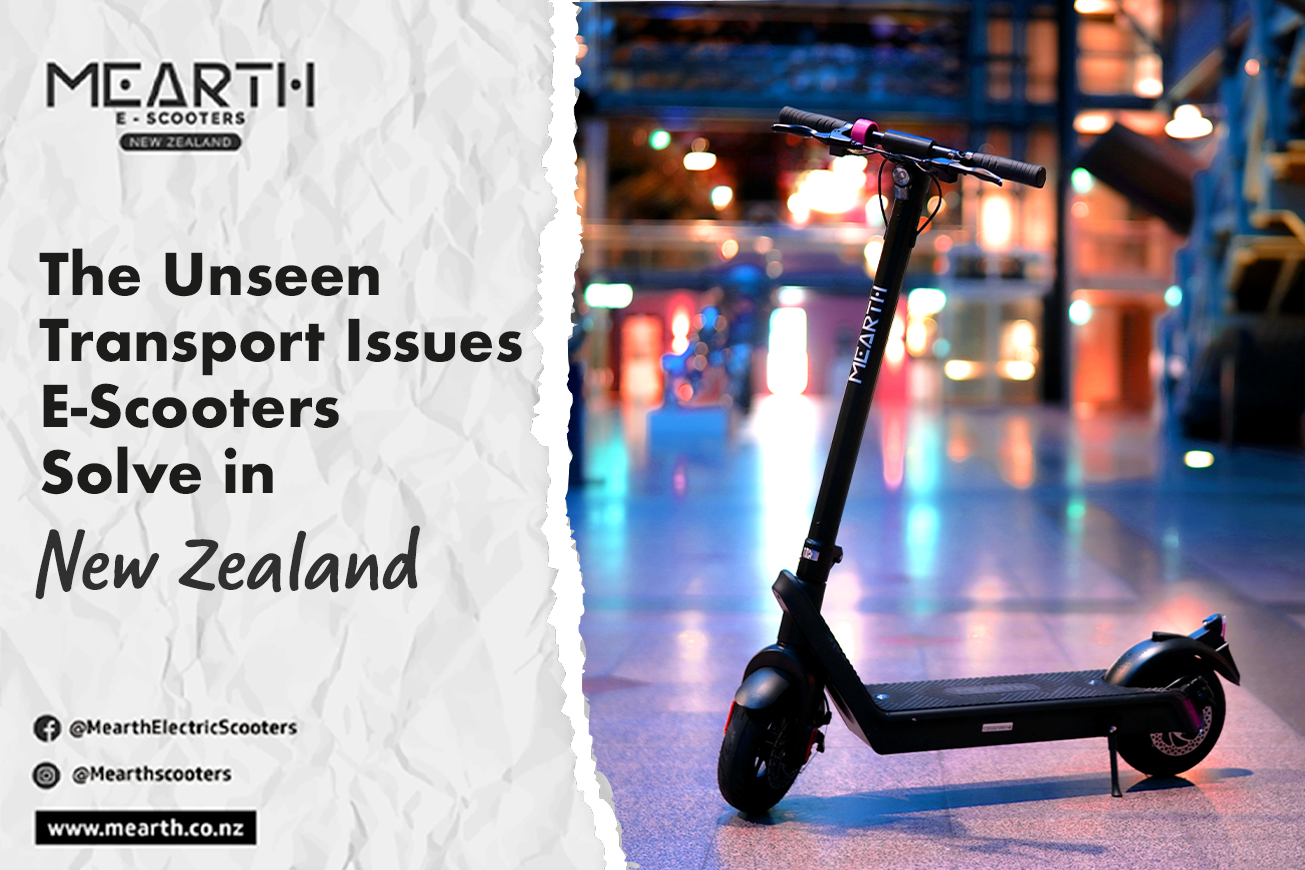
Electric scooters, like the homegrown Australian maker of environmentally responsive personal mobility devices Mearth, intend to stay, for the long haul. The goal is clear: to help realize the mission of making sustainable transport – and help improve the lives of innumerable commuters.
New Zealand authorities, putting their efforts together, are considering the imperative need for electric scooters to be integrated with other modes of transport and structures to ensure their positive impacts and minimize potential adverse consequences.
The formulation of clear and consistent traffic rules and road regulations will help to balance the needs and rights of different road users, not just e-scooter riders.
The call for e-scooters and other personal mobility devices’ needs to have adequate network, infrastructure and facilities to sustain and maintain road safety and storage must have prompt resolution.
Afterall, their considerable contribution to transportation are not at all trivial, and although not quite visible on a grand scale — yet, the growing number of happy and satisfied e-scooterists appreciate the ease, accessibility and convenience that electric scooters provide every time, at any time.


