





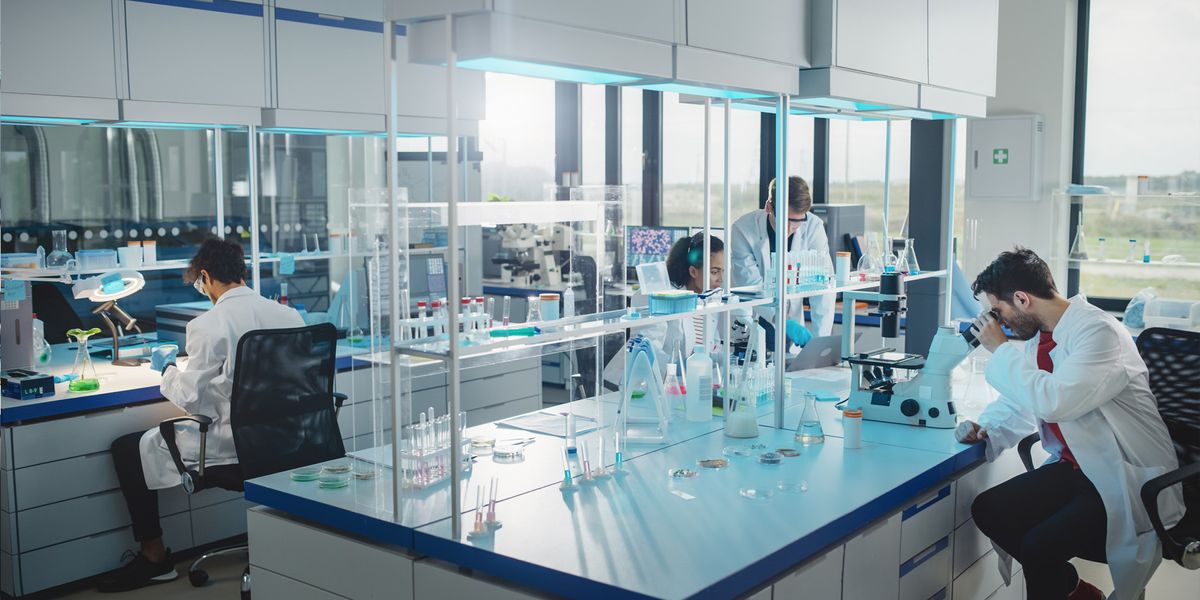


Any scientific laboratory must be maintained well throughout the year to sustain the equipment and get accurate results.
If lab practices are not maintained, then it can cause a whole lot of hazards. Your experiments will bear unsatisfactory results, and anyone can get grievously injured.
In fact, 25-38% of lab personnel have reported being in some kind of lab accident that wasn’t even reported to the authorities.
If you wish to know how to keep your lab clean and safe, you must first know what to avoid. Here are some signs that a laboratory is not well-maintained.
- Personnel don’t wear PPE all the time
One of the most basic rules of laboratory handling is that whenever someone in the lab handles dangerous chemicals or reagents; they must wear PPEs.
PPEs are special uniforms that ensure the reagents don’t get contaminated through direct contact with hands and that nobody gets hurt while handling corrosive substances.
Unfortunately, in many labs, people often forget to wear their PPE or choose not to.
And even when they do wear them, the PPEs are not washed properly or are torn. Again, this is a sign of poor laboratory practices.
- Inaccurate results are frequent
In a laboratory, accuracy is extremely important when it comes to the results. So, another sign of a poorly-maintained laboratory is the inconsistent results in the laboratory equipment.
This often happens if the equipment itself is old or not maintained properly. For example, if the machines show inaccurate numbers frequently, it’s time to look at what’s going wrong.
In some situations, the equipment might show a glitch, or maybe the readings taken by the lab personnel might be wrong.
But if you have to reset the equipment every now and then, it means that the lab requires new tools.
- The samples are not checked properly
In chemical or biological labs, reagents like chloroform, ethyl alcohol, phenol, and salts are used daily.
So it only makes sense that a large batch of these liquids and salts will be purchased from wholesalers or retailers.
However, most lab assistants or guides often forget to double or triple-check the purity of reagents before using them.
Chemical carryover of these substances can severely impact results. So, it’s important to always check the quality of the received samples using spectroscopy.
You must change this practice if your lab uses these reagents straight from the packets.
- New machines require repeated repairs
The last thing you’d want your laboratory team to do is constantly send over new equipment for repairs and services.
While every lab equipment needs a good inspection now and then, they should be limited to routine checkups only.
If your machines constantly break down and have to be shipped off to the parent company, it’s not being used properly.
Either people are handling sensitive instruments too roughly or mishandling the buttons. So, ensure everyone goes through the user manual before handling any new equipment.
- Control samples are not run
Control samples are used for two major reasons: firstly, it ensures that your calculations have worked properly, and secondly, it serves as the basis of comparison between two groups of samples.
Before every reading, you must note the control sample details and whether the results are satisfactory.
If you run an experiment without studying the control sample first, you won’t understand whether the zero readings are accurate.
Every good laboratory needs control samples to ensure that the experiment succeeds.
- There is spillage everywhere
Frequent spillage in different parts of the laboratory is unhygienic and can hamper the experiments. These signs show how callous the lab workers are.
Ideally, the lab personnel must clean up every little spill at the end of the day using proper cleaning tools.
In many laboratories, people carry food inside and spill crumbs or sauces. While carrying food inside the laboratory is strictly prohibited, the spills caused by food items must also be cleaned.
You need to know which stains require which stain-remover to keep the lab stain-free.
Over to you
These are some of the common signs of a poorly maintained laboratory. If your lab also shows these signs, training your labmates about good laboratory practices is time.


