




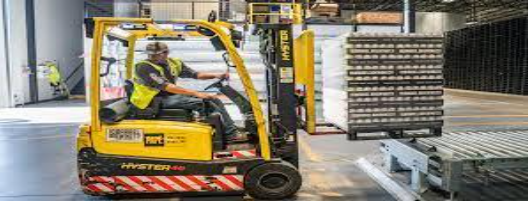


Forklift tracking technology involves using various tracking systems and devices to monitor and manage forklifts’ location, movement, and operational data within a warehouse or industrial setting.
This technology typically involves the integration of sensors, GPS (Global Positioning System), RFID (Radio Frequency Identification), or other technologies to track and gather information about forklifts in real time. Forklift tracking technology can play a crucial role in enhancing safety in a warehouse environment.
By implementing the following measures, you can effectively leverage forklift tracking technology to improve safety:
Real-Time Location Tracking
Utilize GPS or RFID technology to track the real-time location of forklifts within the warehouse. This enables you to monitor their movements, identify potential hazards, and take proactive measures to prevent accidents.
Install GPS devices on forklifts to accurately track their location within the warehouse. GPS technology uses satellite signals to determine the precise position of the forklift in real time. This information can be transmitted to a centralized system or software that monitors the movements of each forklift. Alternatively, you can utilize RFID (Radio Frequency Identification) technology to track forklifts within the warehouse. Place RFID tags on the forklifts and set up RFID readers at strategic locations throughout the facility. As the forklifts move past these readers, their locations are automatically recorded and updated in the system.
Collision Detection and Avoidance
To enhance safety in the warehouse, collision detection, and avoidance systems can be implemented on forklifts. For instance, you can install proximity sensors or ultrasonic sensors on forklifts to detect objects or obstacles in their vicinity. These sensors can continuously monitor the surroundings and provide feedback to the operator.
Alternatively, you can install cameras on forklifts that provide a live feed of the surrounding area. This visual information can help operators identify potential hazards and take appropriate action.

Speed Monitoring
Implement speed monitoring systems to track the speed at which forklifts are being operated. This helps identify instances of excessive speeding, allowing you to enforce speed limits and reduce the risk of accidents. Choose the appropriate technology for speed monitoring, such as speed sensors, GPS tracking devices, or telematics systems. Consider factors like accuracy, compatibility with your forklift fleet, and real-time monitoring capabilities.
Also, establish speed limits based on the layout of your warehouse, traffic patterns, pedestrian areas, and other safety considerations. Set clear speed limit policies that comply with relevant regulations and ensure the safety of operators and personnel working in the facility. You can also install the chosen speed monitoring technology on each forklift in your fleet. Depending on the system, this may involve mounting speed sensors, connecting GPS devices, or integrating telematics systems.
Geofencing
Geofencing is a valuable feature of forklift tracking technology that helps improve safety and compliance within the warehouse. Geofences are virtual boundaries or zones that can be created using GPS or RFID technology. These boundaries are typically defined using specific coordinates or by setting up RFID readers at strategic locations within the warehouse.
Besides, within the geofencing system, you can designate restricted areas or zones where forklifts should not enter or operate. These areas can include pedestrian zones, storage areas with delicate inventory, hazardous material storage, or restricted access zones.
Operator Identification
Implement a key card system where each forklift operator is assigned a unique identification card. The operator must swipe or insert their key card into a reader before starting the forklift. This ensures that only authorized individuals with the appropriate card can access and operate the forklift.
Also, be sure to utilize biometric identification methods such as fingerprint scanners, iris scanners, or facial recognition systems. Each authorized forklift operator will have their unique biometric data registered in the system. Before starting the forklift, the operator will need to provide their biometric data for verification and authentication.
Maintenance and Inspection Reminders
Use the tracking technology to schedule and monitor regular maintenance and inspections for forklifts. Automated reminders can be sent to maintenance teams, ensuring the forklifts are properly working and reducing the likelihood of breakdowns and accidents. Maintenance and inspection reminders guarantee forklift driver safety.
Data Analysis and Training
Collect and analyze data generated by the tracking technology to identify patterns, near-miss incidents, and areas for improvement. Use this data to provide targeted training programs for forklift operators, addressing specific safety concerns and promoting a culture of safety in the warehouse.
Emergency Response
Integrate the tracking technology with your emergency response system. In the event of an accident or emergency, the system can quickly identify the location of the forklift involved, allowing for faster response times and ensuring the well-being of operators and other personnel.
Continuous Improvement
Regularly review and update your safety protocols and procedures based on the insights gained from the tracking technology. Actively seek feedback from forklift operators and other warehouse personnel to identify potential safety issues and implement appropriate measures.
By incorporating forklift tracking technology and implementing these safety measures, you can significantly enhance safety in the warehouse, reduce accidents, and promote a safer working environment for all personnel involved.


