




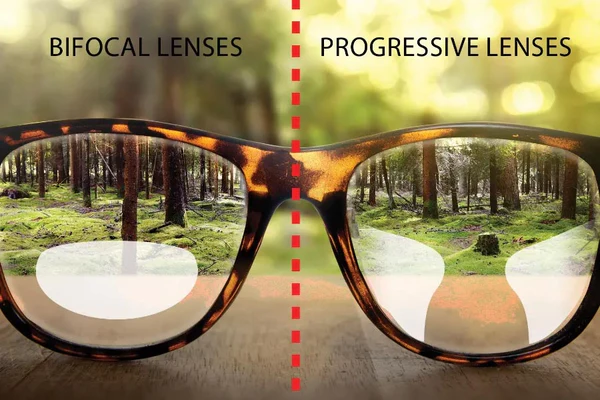


Bifocal lenses are a remarkable innovation in the world of eyewear, defying the usual norms by allowing a single pair of glasses to have two distinct areas of focus. Picture this – one moment you’re engrossed in your favorite novel, the next you’re observing the details of a bird perched on a faraway tree. All this without having to switch between different pairs of glasses. Isn’t that fascinating? Bifocal lenses make this possible by cleverly incorporating two lenses into one frame. Well, fasten your seatbelts and prepare for a fascinating deep dive into the world of bifocal glasses, where we explore how these incredible inventions allow two lenses to coexist in one frame.
The Genesis of Bifocal Glasses
The present-day bifocal safety glasses are a result of a lot of research and evolution. Let’s see how this great invention took place.
Benjamin Franklin: An Unexpected Inventor
Surprisingly, the credit for the invention of bifocal glasses goes to the eminent polymath, Benjamin Franklin. As an individual plagued by presbyopia, he grew weary of continuously alternating between his reading glasses and distance glasses. So, he devised an ingenious solution: why not combine both into one? And that’s how bifocal glasses were introduced to the world.
How do Bifocal Lenses Work?
The exceptional functionality of bifocal lenses rests in their unique design and layout, which blends two distinct optical strengths into one lens. This dual-power setup is achieved by designing the lower half of the lens for near vision, useful for tasks such as reading or sewing, and the upper half for distant vision, which comes into play when you’re driving or watching television.
The ability to simultaneously cater to these two vision needs stems from the strategic placement of these two lens powers. When you’re looking straight ahead or at a distance, your eyes naturally align with the upper half of the lens, leveraging its far vision capabilities.
Conversely, when your eyes glance downward to read or inspect something closely, they align with the lower half of the lens, thereby utilizing its close vision capacity. This smooth switching between different zones of the lens, depending on where your eyes are focused, is the essence of how bifocal lenses work.
Bifocal Glasses: Unpacking the Mechanics
In essence, bifocal glasses incorporate two distinct parts, each designed to address a specific vision impairment.
The Upper Lens: Catering to Distance Vision
The top part of the lens is usually dedicated to rectifying distance vision. But why do we even need help with viewing far-off objects?
Deciphering Presbyopia
Presbyopia is an age-related condition where the lens in our eye loses its flexibility, making it challenging to focus on near objects. That’s where the upper portion of the bifocal lens steps in, aiding in clearer distance vision.
The Lower Lens: Serving Near Vision
In contrast, the bottom segment of the lens is fashioned for near-vision tasks, such as reading a novel or scrolling through social media on your smartphone.
Various Types of Bifocal Glasses
Just as with any technology, bifocal glasses are available in various types, each crafted to suit different needs.
1. Flat-Top or D-Segment Bifocal Glasses: A Popular Choice
Flat-top bifocal glasses, often chosen by most, feature a D-shaped segment for close-up tasks, conveniently located at the lower end of the lens.
2. Round Segment Bifocal Glasses: Circle of Clarity
As suggested by their name, round segment bifocal glasses incorporate a circular near segment instead of a flat one, providing an alternative design.
3. Executive or Franklin Bifocal Glasses: All-In-One Solution
Last on the list, executive bifocal glasses, alternatively known as Franklin bifocal glasses, consists of two full lenses – one for distance and another for reading. These are then halved and seamlessly merged into one.
Advantages of Bifocal Glasses
The bifocal glasses lie not only in their unique design but also in the myriad advantages they bring to the table. These versatile eyeglasses address multiple vision needs at once, offering several benefits for their wearers.
- Dual-Purpose Vision Correction: The most prominent advantage of bifocal glasses is their dual-function capability. By integrating two optical corrections into a single lens, they rectify both distance and near vision. This dual-purpose functionality saves wearers from the hassle of juggling between two pairs of glasses for different vision needs.
- Cost and Convenience: Imagine having to purchase two separate pairs of glasses – one for reading and one for distance viewing. Not only would this be inconvenient but also more expensive. bifocal glasses, with their two-in-one design, are a cost-effective and convenient solution, eliminating the need for multiple pairs of eyewear.
- Ease of Adaptation: Although there’s a short adjustment period, many users find bifocal glasses relatively easy to adapt to. Once accustomed, the transition between the two lens areas becomes almost second nature, enabling wearers to shift their focus smoothly between near and far objects.
- Lifestyle Compatibility: Bifocal glasses can be a game-changer for active individuals or those with dynamic lifestyle requirements. Whether you’re working on a computer, reading a menu, or hiking in the mountains, bifocal glasses provide the necessary visual clarity without the need for constant eyewear changes.
- Reduced Eye Strain: Regularly swapping between different pairs of glasses can strain the eyes. With bifocal glasses, the eyes can adjust to changes in viewing distances more naturally, thus potentially reducing eye strain.
- Improved Posture: People who use reading glasses often crane their necks to see distant objects clearly. With bifocal glasses, you can maintain a more natural and comfortable posture as you don’t need to lift your chin to see through the lower part of the lenses.
- Versatility: Bifocal glasses can be designed to fit almost any frame style, offering wearers a wide range of eyewear options. This versatility means you don’t have to compromise on your personal style while enjoying the benefits of bifocal glasses.
bifocal glasses, therefore, offer a perfect blend of practicality and convenience, enhancing the quality of life for those who require multifocal vision correction.
Disadvantages of Bifocal Glasses
However, every rose has its thorn. Bifocal glasses require an adjustment period, and the visible line dividing the lenses may be disconcerting to some wearers.
Exploring Alternatives to Bifocal Glasses
Despite the practicality of bifocal glasses, some might seek alternatives that better suit their specific needs. Here are the alternative options that you can consider:
Progressive Lenses: A Seamless Transition
Progressive lenses provide a smooth transition between multiple focal points and provide a visually seamless experience.
Trifocal Lenses: Triad of Vision
Trifocal lenses offer three focal points – for distance, intermediate, and near vision – expanding the possibilities of visual aid.
Summarizing the World of Bifocal Glasses
Bifocal glasses, an ingenious invention credited to Benjamin Franklin, revolutionized vision correction by offering two lens powers in one frame to address presbyopia and other vision impairments. These lenses come with several advantages such as convenience, cost-effectiveness, and versatility.