





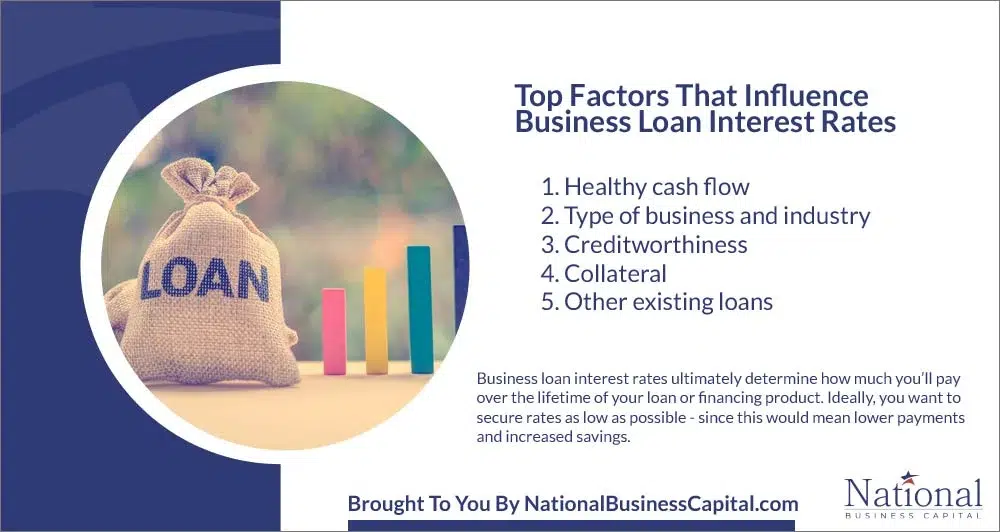


When you run a small business, getting a loan can be a big step. One key thing to think about is the interest rate. Different things can affect how high or low your interest rate will be. This is especially true for SBA loan interest rates. Understanding what influences these rates can help you find the best loan option for your business. Here, explore the factors that can impact the SBA loan interest rates and other loan rates for small businesses.
Credit Score and History
Your credit score and history are among lenders’ top factors when setting interest rates. A high credit score indicates to lenders that you’re a responsible borrower, which can lead to lower interest rates. This score is based on your past financial behavior, including how timely you pay bills and manage existing debts.
If your credit score is lower, lenders may see you as a higher risk, which can result in higher interest rates. Focus on improving your credit score to improve your chances of getting a better rate. This can involve paying down debts, ensuring all bills are paid on time, and checking your credit report for inaccuracies.
Lantern by SoFi says, “Your creditworthiness and the collateral you provide (where required) usually determines your specific interest rate.”
Business Financial Health
Lenders also look at how your business is doing financially. They want to see that your business makes enough money to pay back the loan. This includes looking at your revenue, profits, and cash flow.
Lenders might offer lower interest rates if your business is doing well financially. But if your business is struggling, you might get higher rates. Keeping your business finances strong can help you get better loan terms.
The Lender and Loan Type
Different lenders and types of loans have different interest rates. For example, SBA loan interest rates are often lower because the government backs these loans, making them less risky for lenders.
Banks, credit unions, and online lenders all offer different rates. It’s a good idea to shop around and compare rates from different lenders to find the best deal.
The Economy
The overall economy can affect loan interest rates. When the economy is doing well, interest rates might be higher. But when the economy struggles, rates might be lower to encourage people to borrow and spend money.
You can’t control the economy, but knowing how it can affect your loan rates is good. Keeping an eye on the economy can help you decide when to apply for a loan.
The Amount and Term of the Loan
The amount of money you borrow and how long you take to pay it back can also affect your interest rate. Larger loans or loans with longer terms might have higher interest rates because they’re riskier for lenders.
When choosing a loan, consider how much you need and how quickly you can repay it. Sometimes, borrowing less or choosing a shorter loan term can get you a lower interest rate.
Many factors can influence the interest rates on loans for small businesses, including SBA loan interest rates. Your credit score, your business’s financial health, the type of lender, the economy, and the amount and term of the loan all play a role. Understanding these factors can help you find the best loan for your business. Remember, a lower interest rate can save you money and help your business grow.


