

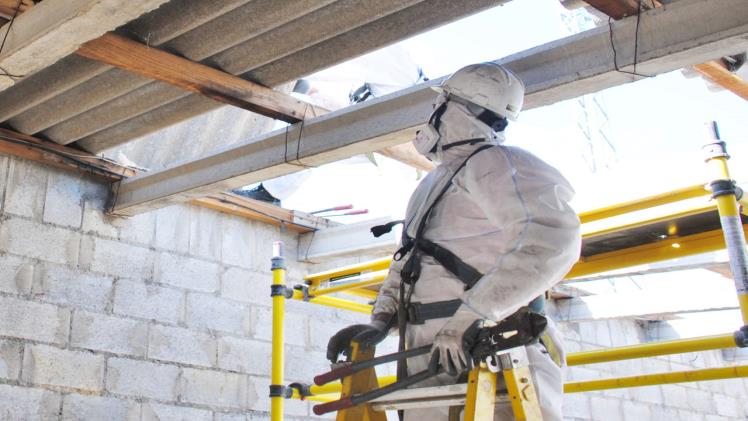

Despite being banned in 1999, over 1.5 million buildings in the UK still contain asbestos. These buildings include commercial buildings such as offices and factories, homes, and public buildings such as schools and hospitals.
Asbestos is only dangerous if disturbed, for example, during renovation or construction. However, no UK register lists the buildings containing asbestos; therefore, people with roles like firefighting, cleaning, demolition, construction, or renovation may be exposed to asbestos without prior warning. Other people present in the same vicinity are also at risk.
Advance Asbestos Removal techniques now employ cutting-edge technology and rigorous safety protocols to efficiently and safely eliminate hazardous asbestos materials from various structures.
According to HSE, around 1.3 million tradespeople are at a high risk of asbestos exposure. And they can come into contact with asbestos on average about 100 times a year.
Asbestos – The Silent Killer
Asbestos is a hazardous mineral, which is also known as the silent killer due to its long latency period. It takes decades for signs of asbestos-related diseases to start showing; hence a diagnosis of asbestos-related diseases is usually possible after 20 to 50 years after exposure.
Astonishingly, the number of deaths caused by asbestos exposure exceeds those caused by car accidents. Asbestos can lead to various forms of cancer, such as mesothelioma, lung, ovarian, and laryngeal cancer. Additionally, asbestos can cause non-cancerous conditions like asbestosis, pleural plaques, pleuritis, diffuse pleural thickening, pleural effusions and atelectasis. Although these conditions are not cancerous, they can still result in fatality.
Why Was Asbestos Widely Used in the Past?
Despite the current legal prohibition on the use of asbestos in the construction or renovation of any buildings, substantial quantities of asbestos were utilised in the past for various purposes, including:
- Lagging applied to plants and pipelines
- Sprayed coatings on structural steelwork for fire and noise insulation
- Insulation products like fireproof panels
- Asbestos cement roofing materials
A significant amount of this asbestos-containing material (ACM) remains in existence. However, buildings constructed after 2000 are unlikely to contain ACMs.
Before the widespread awareness of the detrimental health effects, ACMs were exceptionally beneficial due to their following properties:
- Chemically stable nature
- Lightweight
- Non-corrosive
- Resistant to fire
- Strong
- Thermally inert
- Electrical insulator
- Nonsolvent nature
Furthermore, asbestos was widely available and highly affordable.
How Does Asbestos Exposure in the Workplace Occur?
Asbestos is the leading cause of work-related deaths in the UK. As long as asbestos remains undisturbed and in good condition, the health risk is minimal. However, when disturbed or damaged, it becomes hazardous as it releases asbestos fibres into the air, which people can inhale.
There are various potential ways in which workers can be exposed to asbestos-containing materials (ACMs) in the workplace:
- Certain workers handle products that contain asbestos, which can release tiny fibres into the surrounding air.
- Even if workers don’t directly handle asbestos-containing products, they can still be at risk if they are used in their work environment.
- Some work sites involve the extraction of asbestos directly from the ground, resulting in the release of microscopic fibres into the air.
The fibres released from Asbestos cannot be removed once they are ingested or inhaled. As time passes, this can cause severe tissue damage, triggering cancer.
Consequences Workers Face After Asbestos Exposure
Individuals exposed to asbestos several decades ago are particularly susceptible to developing mesothelioma today, as it typically takes 20-50 years for asbestos-related diseases to manifest. While most present-day worksites are asbestos-free, the risk lies with those who faced exposure in the past.
Asbestos tends to dislodge from its stable form quickly and can crumble effortlessly. Asbestos dust clouds in a worksite can be difficult to detect, making it challenging for workers to take necessary precautions for self-protection.
Upon inhalation or ingestion, asbestos fibres do not immediately cause health issues. Instead, these fibres become trapped in the body and gradually irritate healthy tissue. This ongoing irritation leads to scar tissue formation over time and, in some instances, the development of malignant (cancerous) tumours. Asbestos-related cancers like mesothelioma are highly aggressive and are often diagnosed at advanced stages, having already spread throughout the body.
It’s important to note that asbestos exposure does not always result in cancers such as mesothelioma. In some cases, asbestos can cause non-cancerous conditions like asbestosis, which presents symptoms such as shortness of breath, pain, and reduced lung function.
Classification of Risk Associated with Asbestos Work
Carrying out asbestos work is classified into three corresponding health-risk categories. This determines who can carry out the work and what precautions must be taken in advance:
Non-Licensed Work
Non-licensed work involves lower-risk asbestos work. It does not necessarily require an asbestos license but they may require basic awareness courses such as COSHH training for cleaners.
Some roles that may require lower-risk asbestos work include plumbers, demolition workers, construction workers, roofers, plasterers, renovators, painters, carpenters, electricians, and HVAC engineers.
Notifiable Non-Licensed Work (NNLW)
Notifiable non-licensed work also does not need an asbestos licence but it requires the employer to meet some requirements such as informing the relevant enforcing agency before starting the work, designating areas where work ought to be done, ensuring that the medical examinations of the employees are carried out and maintaining their health records.
Some examples of NNLW include drilling holes in structures having ACMs, repairing/cleaning roofs with asbestos, repairing damage in asbestos insulation boards, maintenance work on ACMs, etc.
Licensable Work
Licensable work includes higher-risk asbestos work, and that must be performed only by licensed contractors with a licence from HSE’s Asbestos Licensing Unit.
Some job roles that belong to this category involve those with the duty to manage asbestos as well as those who are responsible for eliminating sprayed coatings containing asbestos, working on asbestos millboard, handling loose-fill insulation having asbestos, and removing or conducting any operation that may disturb pipe lagging made from asbestos.
How to Minimise the Risk of Asbestos Exposure in the Workplace?
The employer has the responsibility to minimise the potential dangers of asbestos exposure in the workplace by taking reasonable and proactive measures, including:
Research
Conduct thorough research to determine if the building contains asbestos. Additionally, identify the specific type of asbestos present, as some types are more hazardous than others. It is crucial to determine the location of asbestos and assess its condition.
Proactive Approach
Adopt a cautious approach by assuming that materials commonly known to contain asbestos actually do. This proactive assumption ensures that necessary precautions are taken regardless of the material’s specific composition.
Documentation
Maintain accurate and up-to-date records documenting the identified or presumed condition and location of materials containing asbestos. This record-keeping is essential for effective management and monitoring of asbestos-related risks.
Risk Assessment
Perform comprehensive risk assessments to evaluate the potential for exposure to asbestos for any individual who may come into contact with it. These assessments help identify potential hazards and guide the development of appropriate preventive measures.
Action Plan
Implement a detailed action plan to manage and mitigate asbestos-related risks effectively. This plan should outline specific steps to be taken, including proper handling, containment, and disposal of asbestos-containing materials.
Asbestos Removal
Whenever feasible, consider a phased removal approach over an extended period of time to eliminate the risk of asbestos completely. This approach reduces ongoing costs associated with managing and maintaining asbestos-containing materials.
Review & Reasses
Regularly review and reassess risk assessments and the action plan to ensure they remain relevant and effective. This periodic evaluation allows for necessary updates and adjustments to address any emerging concerns or changes in circumstances.
Train Workers
Provide comprehensive information to any individuals likely to work with or disturb asbestos regarding the exact location and condition of materials containing asbestos. This communication is vital to ensure that individuals are aware of the potential risks and can take appropriate precautions to protect their health and safety.
Raise Awareness and Education
Another crucial step in minimising the risk of asbestos exposure in the workplace is raising awareness and educating workers about the dangers of asbestos. The training program must educate employees on identifying, handling, and taking proper precautions when dealing with ACMs.
Personal Protective Equipment (PPE)
Employers must provide suitable personal protective equipment (PPE) to workers who may come into contact with asbestos. This includes respirators, protective clothing, gloves, and protective glasses. The use of PPE should be made mandatory and regularly monitored to ensure its effectiveness.
Ensure Safe Work Practices
Establishing and enforcing safe work practices is essential for minimising the risk of asbestos exposure. Workers should be trained on handling and transporting asbestos safely, ensuring that the fibres are not released into the air during these processes.
Collaborate with Professionals
Engaging the services of professionals who specialise in asbestos management is highly recommended. These experts can conduct thorough assessments, provide guidance on risk management strategies, and assist in the safe removal or containment of asbestos.
Conclusion
The risks associated with asbestos in the workplace are severe and should not be underestimated. Organisations must proactively identify and manage ACMs, provide workers with proper training, and provide appropriate PPE. By prioritising the health and safety of their employees, organisations can create a safer working environment and reduce the long-term health risks associated with asbestos exposure.
