

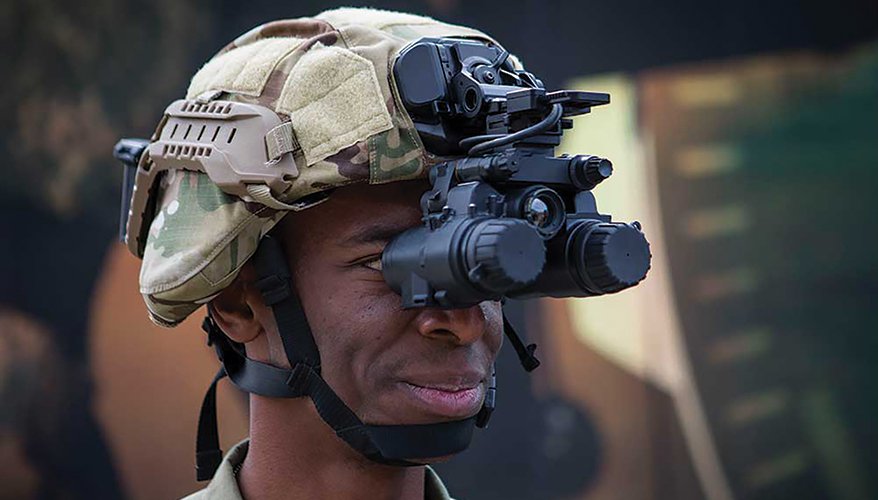

The capacity to see in the dark has always been a sought-after advantage in the fields of contemporary warfare, surveillance, security, and outdoor sports. Since its conception, night vision technology has advanced significantly, with thermal optics playing a significant part in revolutionising how humans view and experience the nighttime environment. The development of thermal optics, from its modest origins to its cutting-edge applications, has been nothing short of amazing.
First Generation and the Development of Thermal Optics
Gen 1 devices were introduced in the 1960s, marking the next major advancement in night vision technology. These devices made advantage of a development known as the
micro-channel plate, which substantially improved the amplification of the light that was already available and allowed for sharper pictures in low-light conditions. Despite the fact that Gen 1 night vision technology represented a substantial breakthrough, it was still constrained by factors including distortion and a small working range.
Working Principle of Thermal Imaging: Infrared radiation is the basis of thermal imaging. Infrared radiation is produced by all things having a temperature higher than absolute zero. A heat map of the area is produced using thermal cameras and equipment that detect this radiation and translate it into a visual image. Based on the differences in the heat that each item and living thing emits, the generated photos enable viewers to discern between them.
Benefits of Thermal Optics
One of the most important benefits of thermal optics is that it can operate in complete darkness. Thermal optics, in contrast to conventional night vision technologies, do not rely on ambient light, making them extremely effective in difficult and varied conditions. Additionally, users with thermal optics have a tactical edge since they can see through smoke, fog, and various types of camouflage.
Thermal Optics’ Evolution
Thermal optics have developed significantly over time, with each iteration bringing with it better functionality and features. The size, weight, and power needs of thermal devices decreased as technology advanced, making them more useful in a variety of applications.
Thermal optics from the second generation (Gen 2) have better sensitivity and resolution, resulting in crisper pictures and a wider detection range. Gallium arsenide photocathodes, one of the main improvements made in Gen 3, led to considerably improved low-light performance and longer lifespans.
Additionally, improvements in manufacturing and miniaturisation methods have produced more compact and cheap thermal devices, opening up their application to a wider audience of consumers. for more information visit website www.plomotactical.com.
Future Prospects
Researchers and engineers are always pushing the boundaries of what is feasible in order to advance thermal optics. Higher resolutions, improved image processing techniques, and the use of artificial intelligence to help with object detection and tracking are all potential developments for thermal imaging technology in the future.
Conclusion
The development of thermal optics has altered how we experience the night. This technology has advanced from its humble beginnings with early night vision devices to the state-of-the-art thermal imaging systems of today, and it has become a priceless resource in a number of industries, including defense, surveillance, and outdoor sports. As technology develops, we may anticipate that thermal optics will become progressively more important in determining how well humans can see and comprehend the environment at night.
