





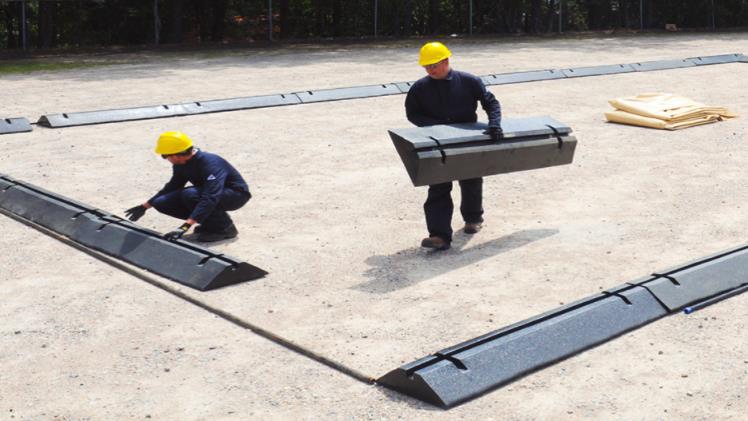


Spills from containers or barrels can have devastating consequences, from polluting the environment to endangering workers. Spill berms provide one solution to help businesses comply with Environmental Protection Agency (EPA) guidelines and maintain safety.
Self rising berms are designed to fit snugly under drums, IBC totes, tanks, vehicles and frac tanks to capture any leaks and spills from them. As flexible secondary spill containment solutions they also help prevent rainwater or environmental moisture from setting off leak detectors. Spill containment tank securement straps also help prevent drums from moving or tipping over and reducing the possibility of spills happening in the first place.
Versatility
Berms are versatile secondary containment systems that can help safeguard your facility and prevent spills. Constructed of chemical-resistant fabrics, berms are durable barriers designed to contain liquids without polluting the environment and seeping into drainage systems. Furthermore, these barriers prevent spilled chemicals from damaging nearby metallic structures or seeping into drainage systems when spills do occur.
Berm kits come in various sizes and shapes to meet your specific requirements. Some feature simple bunds or dikes, which can be placed directly onto the ground to form physical barriers; others feature integrated floors to better direct liquids for containment purposes.
SEI L-Rod Insta-Berm is an effective option for heavy vehicle entry and exit without manual intervention, featuring collapsible walls designed to withstand repeated contact from heavy vehicles. There’s even an aluminum angle wall support block modular model available that gives added structure to sidewalls of berms.
Safety
A spill berm is designed to contain hazardous liquids from spreading onto land or into waterways. Made of non-absorbing materials, these barriers keep any spill from polluting the environment or damaging nearby metal structures – making it the perfect solution for keeping storm drains free from contamination.
Oil and gas facilities require an array of secondary spill prevention equipment, such as portable spill containment berms that can quickly deploy in locations where large quantities of chemicals or fuel are stored, used or transported. Examples include foam sidewall berms, hinge bracket spill containment berms and pop-up berms.
Farms should comply with EPA SPCC regulations by stockpiling spill control devices for accidents or spills that might occur, which includes agricultural chemicals, fuels and pesticides; generators; farming equipment and storage tanks / containers – to comply with this law, stocked spill kits may also be necessary, along with various types of berms and accessories.
Reliability
An effective spill berm, whether small enough for under a drum or large enough to surround an frac tank, serves to protect the environment by keeping hazardous chemicals contained and out of drains or stormwater systems.
Berms come in rigid or collapsible varieties, some functioning like spill trays placed under trucks and equipment to catch leaks and drips while others must be assembled before use – like resizable modular berms around tanks – but regardless of which style you select you can rest assured of top-grade materials and construction that will stand the test of time.
When selecting a drive-through berm, take into account both your budget and height requirements of its sidewalls. For walls that rise after vehicles drive over them, such as Foam Wall Model or Rapid Rise Model; otherwise for an economical solution with quick access select Flexible Eagle Talon SX with its tear and tear-resistant 30 mil chemical and fuel resistant XR-5 modified PVC coated fabric made for quick deployment and tear free performance.
Cost
A spill berm can vary significantly in cost depending on its design and use. Some berms feature foam walls that remain flat until liquid leaks out, at which point their walls rise with it to help contain it. Others act more like portable trays to catch drips and spills from trucks or machinery under them, while still others adhere to the floor of work zones like curbs or dikes for semi-permanence.
A spill berm can be an affordable and effective solution to protect against hazardous leaks or spills that threaten property or endanger employees, while also remaining compliant with EPA and SPCC storage terms and regulations. Spill berms come in different sizes and wall heights; certain models even feature track mats to provide extra strength when used alongside trucks or other heavy machinery.


