

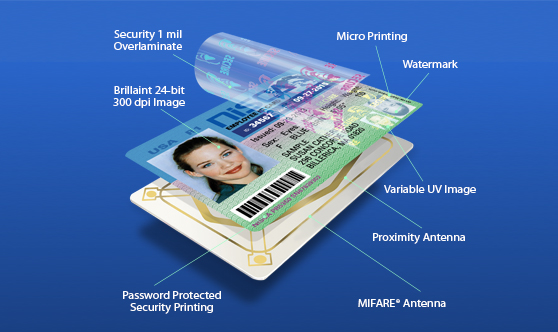

The use of identification (ID) cards has become an increasingly important part of security protocols in today’s world. ID cards are a great way to ensure that only authorized individuals have access to certain areas and resources. They can also help with tracking attendance, verifying identity, and providing additional layers of protection. ID cards can be used to control access to buildings, identify personnel, authenticate visitors, and protect sensitive data.
ID cards have become an essential tool for businesses, schools, and other organizations to enhance security. These cards serve as a quick way to identify who belongs in a particular space and who does not. They contain personal information such as name, photo, and position within the organization. For instance, schools use ID cards to ensure that only students and staff with proper identification can enter the premises.
ID cards also help prevent theft or unauthorized access by creating a record of individuals entering or leaving a building. In addition, many companies use ID card readers to track employee attendance and monitor their movements around the workplace. This technology allows employers to create reports that show how much time employees spend on each task and improve productivity.
Moreover, ID cards provide an extra layer of safety in emergency situations. Disaster response teams can quickly identify individuals needing assistance using their ID card information such as medical history or allergies.
Accelerating ID Card Technology in the 21st Century
Id cards have been around for centuries, but with the rapid acceleration of technology in the 21st century, they have come a long way. From physical cards to digital chips and biometric access systems, id cards are now being used as a secure form of identification. In today’s world, ID card technology is essential for businesses and organizations seeking to protect their employees and customers from security threats.
In the 21st century, ID cards have become an integral part of our lives. These small pieces of plastic not only serve as identification but also provide access to buildings, secure areas and are even used for transactions. In the past few years, technology has advanced to such an extent that ID cards can now provide more than just basic information.
The latest advancements in chip technology have enabled ID cards to store biometric data like fingerprints and facial recognition. This has made it easier for companies and organizations to manage access control systems without compromising on security. Additionally, new software applications have been developed that make use of these features to enhance security measures within sensitive areas.
One area where this technology is being widely adopted is healthcare. Hospitals are using smart ID cards with patient records embedded in them which helps medical professionals easily access a patient’s history and medication details at any time during their visit.
The Benefits & Drawbacks of Using ID Cards Today
Id cards have become an integral part of our lives today. Not only do they enable us to access secure facilities, but they also verify our identities in a variety of situations, from boarding planes to attending events. As such, it is important to understand both the benefits and drawbacks associated with using the best id maker. This article will explore the advantages and disadvantages of utilizing ID cards, providing readers with valuable insight into this commonly used technology.
ID cards are a commonly used tool in today’s society. They serve as an identification method, allowing individuals to prove their identity and access certain areas or services. Buying a specific area fake id is very easy in today’s modern world. Like if you want a fake id texas, that’s not a big issue. You can easily buy a certain area fake id online easily. There are many benefits to using ID cards, such as increased security and ease of access, but there are also some drawbacks that must be taken into consideration.
One of the main benefits of using ID cards is increased security. By requiring individuals to show their ID card before entering a building or accessing certain services, it becomes much harder for unauthorized individuals to gain entry. This can help keep people and property safe from harm. Additionally, many organizations use ID cards as a way to track employee attendance and monitor who has access to sensitive information.
However, there are also some drawbacks associated with using ID cards. For example, they can be easily lost or stolen, which can lead to identity theft and other security risks.
Are ID Cards the Solution to Crime?
The idea of implementing a national ID card system to control crime has been widely discussed in recent years. Proponents claim that such cards could have a tremendous impact on reducing crime, while opponents argue that it could invade citizens’ privacy and cause more harm than good. In this article, we will explore the pros and cons of using ID cards to combat crime, as well as analyze whether or not they are an effective solution for reducing criminal activity.
ID cards have been proposed as a solution to crime in many countries worldwide. The idea behind ID cards is that they would provide authorities with an easy way to identify individuals and track their movements, which would make it easier to prevent or solve crimes. However, there are several arguments against the use of ID cards as a solution to crime.
One argument is that ID cards could be easily forged or counterfeited, rendering them ineffective. Criminals could obtain fake IDs and use them to commit crimes without being caught. Another concern is the cost of implementing and maintaining an ID card system. It would require significant investment in infrastructure, personnel, and technology to issue and manage millions of cards.
Despite these concerns, supporters of ID cards argue that they could provide valuable benefits like reducing identity theft and illegal immigration.
ID Cards: A Necessary Safety Measure?
In today’s world, ID cards are becoming increasingly important for safety and security measures. For many people, carrying an ID is a normal part of everyday life, from students to senior citizens. The debate over the necessity of ID cards is one that has been going on for decades, with arguments for and against their use. In this article, we will explore the pros and cons of using ID cards as a safety measure.
ID cards have become increasingly important in today’s society as a way to verify identity and ensure safety. With the rise of security concerns, ID cards are considered necessary for many institutions such as schools, hospitals, government agencies and private companies. These IDs provide a way to quickly identify individuals and prevent unauthorized access.
One major advantage of using ID cards is that they create a secure environment by preventing outsiders from entering restricted areas. This not only ensures the safety of employees, but also protects confidential information. In schools, ID cards play an important role in keeping students safe by ensuring only authorized individuals can enter school grounds.
Another benefit of using ID cards is that they simplify record-keeping processes. The unique identifier on each card allows organizations to easily track attendance, monitor employee productivity and manage access control. These records can be used to evaluate performance or investigate incidents if necessary.
What’s Behind the Push for ID Cards?
ID cards are becoming increasingly commonplace, with organizations around the world introducing them for a variety of purposes. From verifying identity to tracking attendance, ID cards are seen as an efficient way to process large quantities of information. But what is behind this push for ID cards? In this article, we will explore the potential motivations and implications of implementing ID card systems. We will look at how ID cards can improve security, efficiency and convenience while raising important questions about privacy and access.
The debate around ID cards is not new. It has been going on for years, with proponents and opponents arguing their case for and against them. Supporters of the ID card scheme argue that it will help to combat crime, terrorism, and illegal immigration by making it easier to verify people’s identities. They also suggest that ID cards could be used to access public services such as healthcare, social security benefits, or even voting in elections.
Opponents of the scheme argue that it is an invasion of privacy and could lead to a “Big Brother” state where citizens are constantly monitored. There are also concerns about the cost of implementing such a scheme and who would be responsible for paying for it. Some critics have suggested that there are more effective ways to combat crime and terrorism without resorting to ID cards.
Despite the controversy surrounding ID cards, many countries have already implemented similar schemes successfully.
