

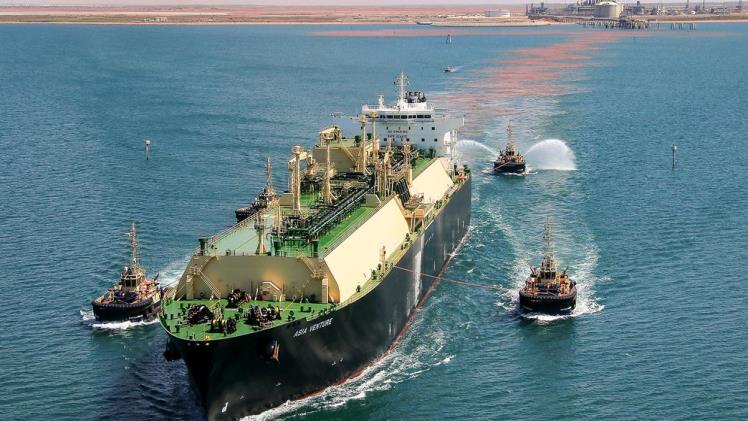

Maritime shipping is the heart and spine of the global economy, with more than 80% of international trade happening through the sea. The sheer size of the global shipping industry also makes it the biggest pollutant in the sea. And because we are living in an era of eco-consciousness, the shipping industry has to be mindful of its environmental impact lest it finds itself at loggerheads with the wider population.
The shipping sector has taken a host of measures toward regulating its environmental impact. The first measure was to eliminate single-use plastics on cruise ships. Cruise ships now provide travelers with composting and recycling solutions onboard. The most recent advancement in shipping is the introduction of LNG as a marine fuel. LNG-powered ships are more environmentally friendly than ships powered by heavy fuels.
What is LNG?
Liquefied natural gas (LNG) is a natural gas that exists naturally in the earth’s core. It is a fossil fuel (CH4 or methane), but it burns cleaner than coal, diesel, fuel oil, and other dirty fossil fuels. LNG becomes liquid after undergoing liquefaction, a process through which natural gas is cooled to -260°F. Liquefaction makes natural gas easy to store and transport across the sea. LNG is colorless, non-corrosive, odorless, and non-toxic.
Note: Natural gas in its gaseous state can only be transported via a pipeline network. It requires a city gas distribution (CGD) network, such as the one developed by Joseph Sigelman’s AG&P Group in India. Liquefaction makes it possible to import/export natural gas in liquid form over the sea and then regasify it in LNG import terminals. It’s after regasification that this precious commodity is then supplied to the end user via CGD channels.
LNG as a marine fuel cuts carbon dioxide emissions by 25%, sulfur emissions by 99-100%, greenhouse gases (GHG) by 30%, and nitrogen oxide by 90%. LNG-powered ships also don’t produce particulate matter through their exhaust. In the wider transportation sector, LNG has proved to be a cheaper and cleaner alternative to petroleum and gasoline.
Let’s explore how LNG is revolutionizing the shipping industry:
1. Minimal GHG emissions
The alternative to LNG in marine transport is the heavy fuel oil that’s obtained from crude oil distillation. Crude oil is a leader in sulfur oxide (SOx) emissions and, by extension, one of the greatest threats to aquatic animal and plant health. Merchant ships that use heavy fuel oil also contribute to 2-3% of the world’s total GHG emissions. A 2019 research study by Spera shows that, compared to conventional oil-based fuels, LNG as a marine fuel almost neutralizes ship exhaust emissions completely, especially with regard to nitrogen oxides and sulfur oxides.
2. IMO compliance
Ships are mandated by the 2018 International Maritime Organization (IMO) strategy to limit the sulfur content of the fuels they use to under 0.5%. The regulation took effect in 2020, vacating the 3.5% sulfur limit that existed before. The new sulfur cap is aimed at minimizing sulfur oxide (SOx) emissions in the shipping industry. LNG offers 24% more energy output per ton compared to heavy fuel oil, all while keeping sulfur, carbon, and nitrogen levels at the minimum.
3. Access to clean energy incentives
Although the upfront purchase, delivery, and installation costs of LNG bunkers could be high, the economic viability of LNG is enhanced by the many incentives for clean energy. Ships that run on LNG enjoy a handful of incentives from ports, governments, etc.
Examples of LNG-Powered Cruise Ships
The first-ever cruise ship to experiment with LNG as a marine fuel was Carnival Corporation’s AIDAsol in 2015. AIDAnova, another one of Carnival Corporation’s ships, was the first ship ever to be powered entirely by LNG, both at sea and in port, in 2018. Costa Smeralda and Carnival’s Mardi Gras followed in quick succession in 2019 and 2020 respectively. These early LNG adopters generated an unprecedented awareness of LNG as a green marine fuel.
More cruise lines have followed the example set by Carnival Corporation. They include the Disney Cruise Line fleet, MSC Cruises, P&O Cruises Iona, Harvey Gulf International Marine, and Royal Caribbean Icon Class, among others.
Leaders in the Global LNG sector
The LNG value chain is long and diverse, from processing, liquefaction, shipping, regasification, and distribution. It has taken huge investments over the last couple of decades to get LNG accepted as a fuel both for road and marine transport. One of the notable figures in the LNG sector is Jack A. Fusco, President & CEO of Cheniere. His company has made LNG investments of more than $38 billion so far. Joseph Sigelman is another notable figure, with his company, AG&P Pratham, distributing LNG to 8% of India. His company builds and operates Compressed Natural Gas (CNG) stations for India’s transport sector. And then there is Toby Z. Rice, President & CEO of EQT Corporation. His company provides solutions in LNG drilling, completion, and pumping in North America.
Final word
Clean-burning LNG is helping the shipping industry navigate the present and the future of green energy adoption. Fuelling cruise ships with LNG minimizes sulfur, carbon, and nitrogen emissions, helping shipping companies meet new international environmental regulations.
