







Goats are versatile animals that have been domesticated for thousands of years. They can thrive in a wide range of environments and are raised for their milk, meat, and fiber. However, to keep goats healthy and productive, it is crucial to provide them with proper nutrition. A well-balanced diet ensures that goats get the nutrients they need to maintain optimal health, growth, reproduction, and milk production.
Goat feed is a critical aspect of goat husbandry as it affects the quality of life and productivity of these animals. Goats require a diverse diet consisting of roughage (hay or pasture), grains, minerals, vitamins, and water. The nutritional needs of goats depend on various factors such as age, weight, breed, gender, pregnancy status, lactation stage, activity level and environmental conditions. Therefore understanding the nutrient requirements of goats at different stages of life is essential for selecting the right types and amounts of feed to meet their needs. This article aims to provide an overview of goat feed options available in the market today while highlighting key considerations when feeding your herd for optimal health and productivity.
Understanding the Nutritional Needs of Goats
The nutritional requirements of goats must be considered to ensure optimal health and productivity. These animals are ruminants, which means they have a four-chambered stomach that allows them to digest fibrous materials effectively. As such, their diets should consist mainly of roughage, such as hay or pasture grass. However, goats also require certain nutrients in their diet that may not be found in sufficient amounts in forages alone.
Goat feed alternatives can help supplement their nutritional needs. For example, grains like corn and oats can provide energy while soybean meal and alfalfa pellets can add protein to the diet. Goats also need minerals like calcium, phosphorous, and salt which can be provided through supplements or mineral blocks. Common nutritional deficiencies in goats include copper deficiency, selenium deficiency, and vitamin E deficiency. Therefore it is important to provide a balanced diet that meets all their nutritional needs to keep them healthy and productive.
Types of Goat Feed Available
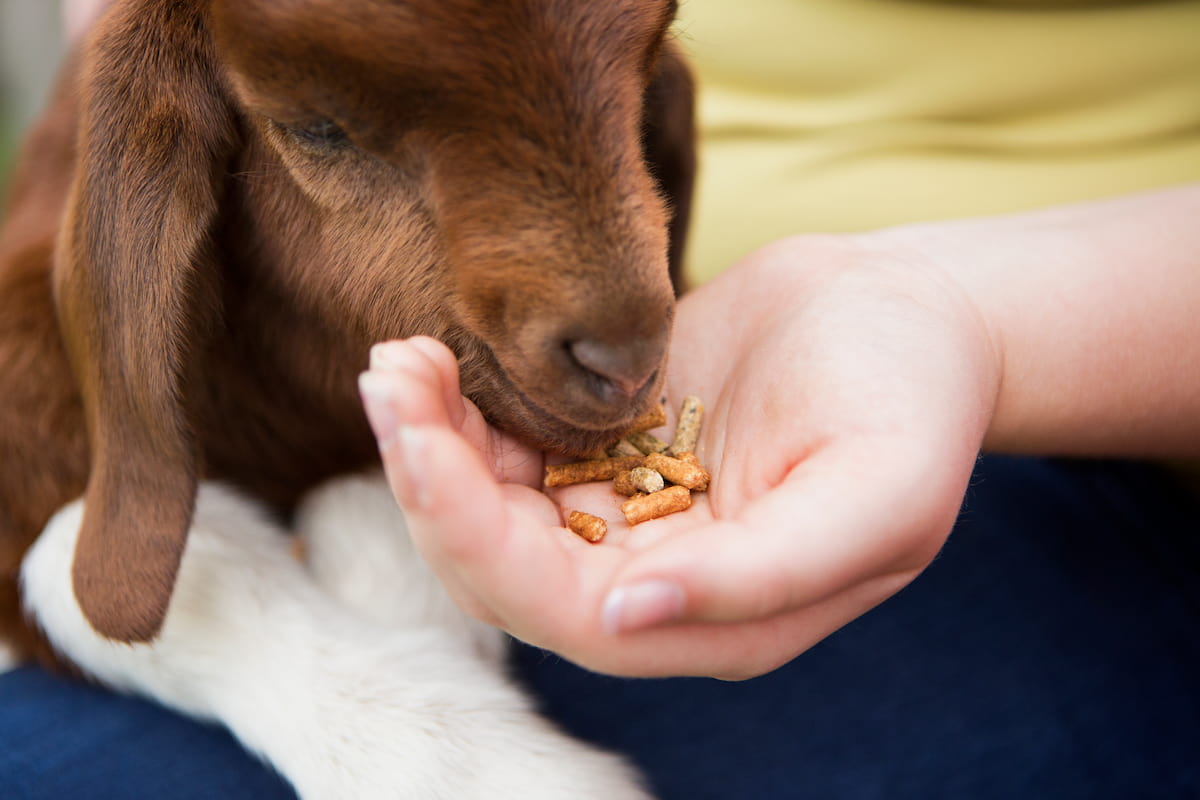
Various options are available for farmers to provide their goats with the necessary nutrients they require. Pelleted feed is a popular option because it’s easy to store, transport and can be formulated to meet specific nutritional requirements. Pellets are made from various grains, like corn and oats, combined with protein sources such as soybean meal or alfalfa.
Haylage options are another choice for goat feed. Haylage is made up of grasses that have been chopped and fermented in plastic bags or wrapped in bales to preserve them. It’s a good source of energy and fiber and can be used as a supplement or complete feed depending on the quality of the haylage. Farmers should ensure that the haylage isn’t moldy or dusty when using it for goat feed since these factors can lead to health issues such as respiratory problems in goats.
Feeding Goats at Different Stages of Life
Goats have different nutritional requirements at various stages of life, making it crucial for farmers to understand the feeding needs during each stage. Newborn goats require colostrum, which is a nutrient-rich form of milk produced by their mothers in the first few days after birth. Colostrum contains essential antibodies and nutrients that are critical for the development of the goat’s immune system. Farmers must ensure that newborn goats receive enough colostrum within their first 24 hours after birth, as failure to do so can lead to weak immunity and increased susceptibility to diseases.
As goats mature, their nutritional requirements change accordingly. For example, senior goats need diets that contain lower levels of protein but higher amounts of fiber compared to younger animals. This is because older goats tend to have a slower metabolism and may experience dental problems or digestive issues, which can be alleviated with a high-fiber diet. Additionally, senior goats may require supplements such as vitamins or minerals if they are not getting enough from their regular feed. It is important for farmers to monitor their goat’s health closely and adjust their diets accordingly based on age and individual needs.
Choosing the Best Feed for Your Herd
Selecting the appropriate diet for a herd requires careful consideration of the nutritional needs of each individual animal. When it comes to goats, their feed requirements depend on various factors such as age, weight, and activity level. However, the quality of feed should also be taken into account. High-quality feed can provide essential nutrients that are necessary for the development and maintenance of healthy goats. In contrast, low-quality feed may not meet the nutritional requirements of goats and could result in poor health outcomes.
Feed quality is an important factor to consider when choosing the best feed for your herd. Although high-quality feeds may come at a higher cost compared to lower quality options, investing in premium feeds can save you money in the long run by reducing veterinary costs associated with malnutrition or other dietary related issues. Additionally, poor nutrition can negatively impact milk production rates as well as overall productivity levels leading to reduced profitability for farmers over time. Therefore, it is important for farmers to carefully compare different types of feeds based on their nutritional value and cost before making a decision that would benefit both their animals’ health and their farm’s economic viability.
Tips for Properly Feeding Your Goats
To ensure the adequate nutrition of a herd, it is essential to follow proper feeding practices that take into account factors such as age and weight. Goats require a balanced diet that includes roughage and concentrates, with the latter comprising no more than one-third of their total intake. Feeding schedules should be consistent, with access to fresh water available at all times.
It is also important to consider supplement options for goats. Depending on individual needs or deficiencies in their diets due to location or season, supplements may be necessary. These can include minerals such as calcium or phosphorus, vitamins A and D, or probiotics to aid in digestion. However, it is important to consult with a veterinarian before introducing any new supplement into the goat’s diet as too much of certain nutrients can lead to health issues. With proper feeding practices and attention paid to supplement options when needed, goats can maintain optimal health and productivity.
Monitoring Your Goats’ Health and Nutrition
Proper monitoring of the nutritional and physiological health of a herd is essential to ensure sustained productivity and wellbeing. One way to monitor your goats’ health is by observing them for signs of common illnesses, such as respiratory infections or parasitic infestations. Regular veterinary check-ups can also help detect early stages of illness and prevent their spread among the herd.
Preventative measures are key in maintaining optimal goat health. This includes proper sanitation practices, regular deworming, and vaccination schedules. In addition, providing a balanced diet with adequate nutrients can help prevent deficiencies that may lead to malnourishment. Signs of malnourishment include weight loss, rough hair coats, and decreased milk production. Addressing deficiencies promptly through appropriate feed management can improve overall health outcomes for your goats.
Conclusion
In conclusion, it is crucial to understand the nutritional needs of goats and provide them with appropriate feed for optimal health. Different types of goat feed are available depending on the stage of life your herd is in. It is important to choose a feed that meets their nutritional requirements and avoid overfeeding or underfeeding them. Monitoring your goats’ health and nutrition is also essential to ensure they remain healthy and free from any diseases.
By following these tips for properly feeding your goats, you can help keep them healthy and productive. Remember to always provide fresh, clean water, quality forage, minerals, vitamins, and protein-rich feed for your goats. Additionally, make sure to monitor their weight regularly and adjust their diet accordingly. With proper care and attention towards their nutritional needs, you can help ensure that your goats live long, healthy lives on the farm.


