


While basic DIY slip ring setups offer cost-effective and customizable solutions, advanced DIY slip ring designs take the concept to a whole new level. In this article, we will delve into the world of advanced DIY slip ring designs, exploring their potential beyond the basic setup. We will discuss specific applications where DIY slip rings can be utilized, showcase advanced features such as multiple channels, high-speed data transfer, and power handling capacity, and provide considerations for implementing these features in DIY slip ring projects. Additionally, we will touch upon PCB slip rings as a professional-grade alternative for complex applications.
Exploring Advanced DIY Slip Ring Designs
Building upon the foundations of basic DIY slip ring setups, advanced DIY slip ring designs offer enhanced functionality and versatility. These designs go beyond simple power and signal transfer, incorporating advanced features to meet specific project requirements. By expanding the capabilities of DIY slip rings, enthusiasts can explore a wider range of applications and achieve more sophisticated results.
Specific Applications for DIY Slip Rings
- Robotics and Automation: DIY slip rings find valuable applications in robotics and automation projects. From transmitting power to controlling motor movements and transferring sensor data, advanced DIY slip ring designs enable seamless communication between stationary and rotating parts of robotic systems. They play a crucial role in articulated robotic arms, robotic grippers, and other complex robotic mechanisms.
- Pan-Tilt Systems: DIY slip rings can be utilized in pan-tilt camera systems for smooth and continuous rotation without tangling wires. These systems find applications in surveillance, photography, and remote sensing, allowing cameras or sensors to rotate horizontally and vertically while maintaining uninterrupted power and data transfer.
- Wind Turbines: In small-scale wind turbines, DIY slip rings enable the transfer of power from the rotating blades to the stationary components. They facilitate efficient energy generation by ensuring a consistent connection between the generator and the power grid, allowing for clean and renewable energy production.
Advanced Features in DIY Slip Rings
- Multiple Channels: Advanced DIY slip ring designs can incorporate multiple channels to accommodate various signals simultaneously. This feature enables the transmission of power, data, audio, video, and other signals through separate pathways, ensuring efficient and organized communication between rotating and stationary components.
- High-Speed Data Transfer: DIY slip rings can be upgraded to handle high-speed data transfer, making them suitable for applications that involve streaming data, such as video transmission or high-resolution sensor outputs. By optimizing the design and utilizing high-quality components, DIYers can achieve reliable data transfer rates without compromising signal integrity.
- Power Handling Capacity: Advanced DIY slip ring designs can be engineered to handle higher power loads. This is particularly useful in applications that require the transmission of substantial electrical power, such as high-power motors, industrial machinery, or large-scale lighting setups. Reinforced conductive paths, proper insulation, and heat dissipation measures are essential considerations in these designs.
Considerations for Implementing Advanced Features
- Design and Material Selection: Advanced DIY slip ring designs require careful consideration of the design and selection of suitable materials. Conductive materials with low resistance and high durability should be chosen to ensure efficient power and signal transfer. The mechanical structure and housing should be robust enough to withstand the specific application’s demands.
- Balancing Cost and Performance: While aiming for advanced features, it is crucial to strike a balance between cost and performance. Some advanced features may require specialized components or manufacturing techniques, which can increase the overall cost. DIYers must evaluate the project requirements and budget constraints to ensure an optimal solution.
- Thorough Testing and Iteration: Implementing advanced features in DIY slip ring designs
requires thorough testing and iteration. DIYers should invest time in testing the slip ring’s performance, reliability, and signal integrity. Regular iterations and improvements based on testing results will help optimize the slip ring’s functionality and ensure its suitability for the desired application.
Brief Mention of PCB Slip Ring
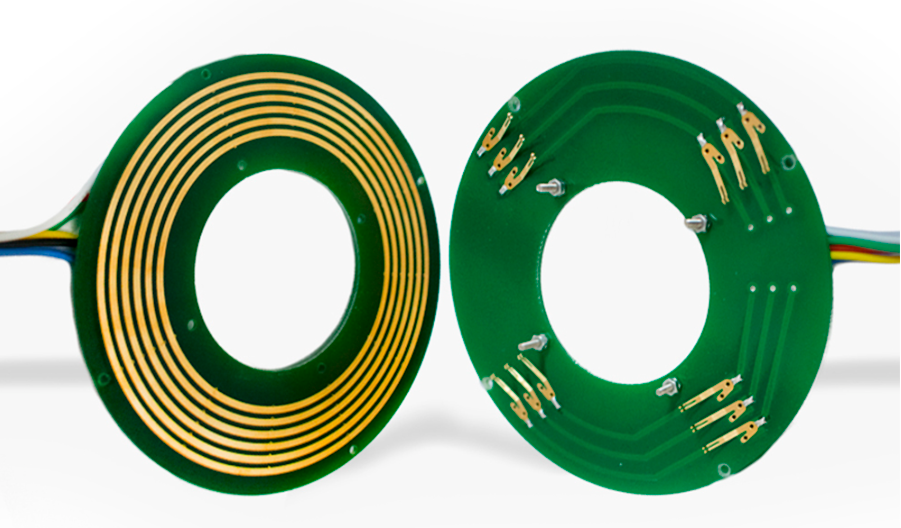
While advanced DIY slip ring designs offer increased functionality, there are certain scenarios where PCB slip rings serve as a professional-grade alternative. PCB slip rings are specifically designed and manufactured using printed circuit boards, ensuring precise alignment, high performance, and reliability. They are commonly used in complex industrial applications, aerospace systems, and advanced robotics, where stringent requirements and precise specifications are crucial.
Conclusion
Advanced DIY slip ring designs enable enthusiasts to unlock customization and functionality beyond the basic setup. By incorporating advanced features like multiple channels, high-speed data transfer, and increased power handling capacity, DIYers can tailor their slip ring projects to specific applications. While DIY slip rings offer flexibility and cost-effectiveness, PCB slip rings remain the go-to choice for complex applications where precision, performance, and reliability are paramount. By understanding the possibilities and considerations associated with advanced DIY slip ring designs, DIY enthusiasts can embark on exciting projects that push the boundaries of slip ring technology.
