







As the use of earnest money becomes more common in the Lone Star state, investors interested in commercial real estate should understand just how much earnest money is required in Texas.
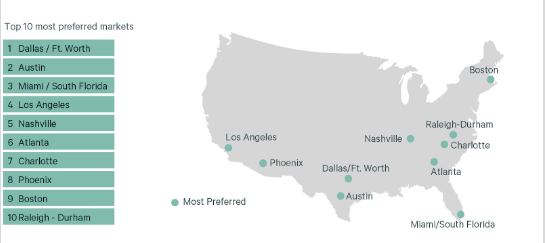
According to Urban Land Institute, Texas is one of the top five commercial real estate markets in the US. CBRE Group, a global real estate company, also lists Dallas-Fort Worth and Austin as the top two sought-after real estate markets in the country.
Top 10 most preferred real estate markets in the US
However, to purchase commercial real estate properties, investors need to come up with a certain percentage of the purchase price as earnest money (also known as a soft deposit) before they can inspect or negotiate for the property.
The use of earnest money helps sellers to identify serious buyers, and it also helps buyers to quickly conclude deals.
In what follows, we consider the use of earnest money in Texas and what commercial real investors can expect in the Lone Star state.
How much is earnest money in Texas?
While Texas is one of the most sought after real estate markets, earnest money requirements tend to be smaller compared to others.
At the moment, sellers often require earnest money that is between 1% and 2% of the property’s purchase price. So, if a property is worth $5 million, the earnest money will be between $50,000 and $100,000.
This is lower than the national average of 1%-5%.
When is earnest money payment made?
In Texas, most sellers will require that earnest money be paid within 48 hours from the time they accept the potential buyer’s offer.
This time frame is a reflection of the level of competition in the state and investors need to put their finances together to ensure they meet up.
While a buyer can request for more time, it is unlikely that the seller won’t find another potential buyer that will be willing to get the funds in less than 48 hours.
It’s also worth mentioning that some buyers are even willing to pay more than the required earnest money amount (1% – 2%) to gain an edge over competitors.
When is earnest money payment deposited with an escrow?
This depends mainly on the agreement between the parties.
However, if both parties do not agree on any definite time, the Texas Real Estate Commission expects the deposit to be made within a reasonable period, which they define as close of business the day of the deal or the day after.
How is earnest money managed?
As with other states, earnest money is held by an escrow that the seller and buyer are comfortable with.
If the deal goes through, the escrow will release the earnest money and it will be used to finance the closing costs of the transaction.
On the other hand, if the deal does not go through due to a contingency already agreed between the buyer and the seller (as seen in the Sale and Purchase agreement), the money will be returned to the buyer. If the reason for the failure was not previously agreed but is due entirely to the seller, the money will still be refundable to the buyer.
It is only when the reason for the failure was not previously agreed and is a fault from the buyer’s side that the fund will be transferred to the seller.
Getting earnest money in Texas
Today it is unnecessary to miss out on commercial real estate deals due to an inability to get earnest money ready on time.
To avoid this scenario, Duckfund has come up with a solution: quick soft deposit financing. Duckfund does not conduct any credit check, so you can complete applications within just 2 minutes. And if successful, Duckfund will provide you with the needed cash within 48 hours. All for a small 2% financing fee.
Furthermore, since there are many profitable commercial properties in Texas, Duckfund allows you to apply for multiple soft deposit loans so you can pursue multiple deals at the same time, should you choose to.
What are you waiting for? Duckfund can help you build a profitable commercial real estate portfolio in Texas without ever worrying about where to get cash for earnest money.


