

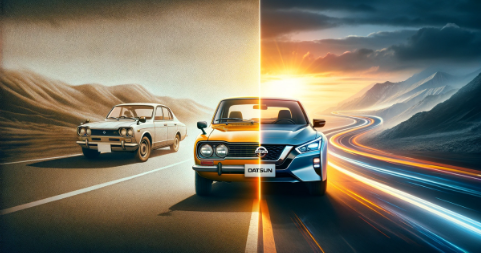

In the world of automotive history, few brands have experienced the kind of transformation that Datsun and Nissan have undergone. These two names are intrinsically linked, representing a fascinating journey of evolution.
From humble beginnings to global prominence, this blog aims to shed light on the captivating story of Datsun and Nissan, highlighting their shared history and unique individual identities.
1. Origins of Datsun and Nissan
Datsun: The Humble Beginnings: In 1911, Masujiro Hashimoto founded the Kwaishinsha Motor Car Works, which later became DAT Jidosha & Co., the precursor to Datsun. The name “Datsun” was derived from the first letters of the surnames of the three key investors: Den, Aoyama, and Takeuchi. Their first vehicle, the DAT, rolled off the production line in 1914, marking the birth of Datsun.
Nissan: A New Chapter Begins: In 1933, Nissan Motor Co., Ltd. was established, making it a relatively latecomer in comparison to Datsun. However, Nissan quickly gained prominence, thanks to its innovative engineering and market-savvy approach.
2. Post-War Era and the Merger
Datsun’s Post-War Success: After World War II, Datsun thrived in the Japanese market, producing compact cars that resonated with consumers. Their vehicles were known for reliability and affordability, helping Datsun gain traction both at home and abroad.
The Merger: Datsun Becomes Nissan: In 1934, Nissan acquired a controlling stake in DAT Jidosha & Co., leading to the eventual merger in 1934. The decision to unify under the Nissan name was a strategic one, aimed at building a stronger global brand identity.
3. Rise to Global Prominence
Datsun’s Influence on Nissan: Datsun’s legacy played a crucial role in shaping Nissan’s image and product lineup. The early success of Datsun’s compact cars influenced Nissan’s approach to producing more affordable vehicles while maintaining high-quality standards.
Nissan’s International Expansion: In the 1950s and 1960s, Nissan made a concerted effort to expand internationally, with a particular focus on the American market. The iconic Datsun 510 and later the Datsun 240Z (Nissan Fairlady Z in Japan) garnered significant attention and sales in the U.S., establishing Nissan as a global player.
4. Rebranding to Nissan
The Global Shift: In 1981, Nissan officially phased out the Datsun name globally, adopting “Nissan” as its primary brand. This move aimed to simplify branding and strengthen the global recognition of the company.
The Legacy of Datsun: Despite the rebranding, Datsun still holds a special place in the hearts of many enthusiasts, especially those who remember the early Datsun models that helped shape Nissan’s identity.
5. Modern Nissan and Datsun
Nissan’s Diverse Lineup: Today, Nissan boasts a diverse lineup of vehicles, from the popular Nissan Altima to the rugged Nissan Frontier and the electric Nissan Leaf. The brand continues to innovate and remains a global automotive force.
Datsun’s Rebirth: In 2013, Nissan revived the Datsun brand for emerging markets, offering affordable and reliable vehicles tailored to the needs of these regions. This revival is a testament to the enduring legacy of Datsun.
In the dynamic world of automotive history, the journey of Datsun and Nissan is a compelling narrative of transformation and adaptation. From their modest beginnings to becoming influential players in the global automotive industry, these brands showcase the power of evolution. While Datsun may no longer be the primary name, its legacy lives on within Nissan’s DNA, reminding us of the enduring spirit of innovation and reliability that has defined these brands for over a century. As we look ahead, it’s clear that the evolution of Datsun and Nissan is far from over, promising exciting developments for automotive enthusiasts worldwide, whether they’re seeking ‘Datsun 240z parts‘ or ‘280z parts‘ to keep the legacy alive.
