

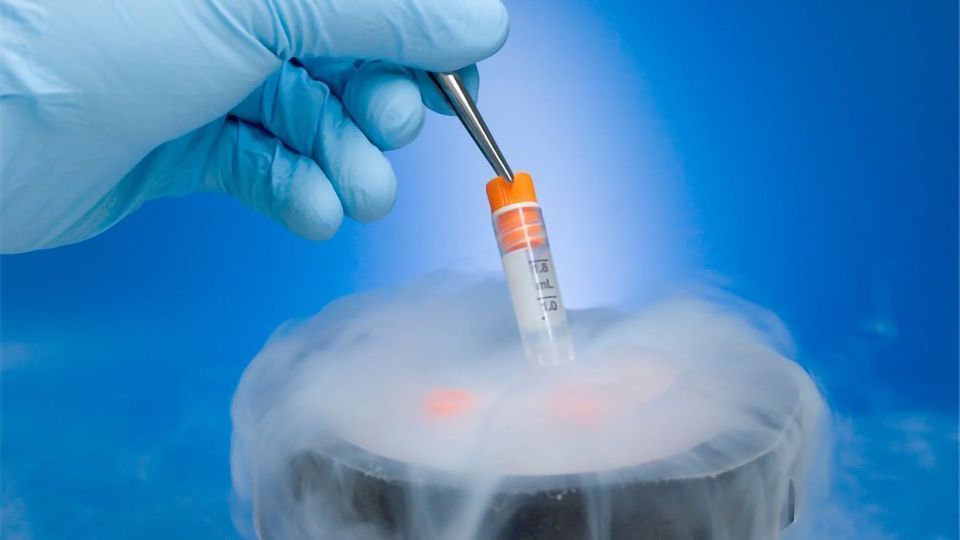

Cryopreservation is a technique used to preserve living cells and tissues by cooling them to very low sub-zero temperatures. At such low temperatures, any biological activity, including cell division and metabolic processes, is safely stopped or slowed down significantly until the sample is rewarmed. When cells are preserved by cooling to -196°C using liquid nitrogen, it is known as cryopreservation.
History and Development
The concept of cell cryopreservation was first proposed in the 1940s but it wasn’t until the late 1950s and early 1960s that practical techniques were established. In 1949, Polge, Smith and Parkes successfully froze and thawed fowl spermatozoa. In 1956, Whittingham used glycerol to cryopreserve mouse embryos and in 1964, Whittingham, Leibe and Wilmut cryopreserved 1-cell mouse embryos using glycerol and stored them in liquid nitrogen.
Through the 1970s and 1980s, research led to improvements in cryopreservation solutions and protocols allowing for freezing whole ovaries, testes, embryos and many other cell types. By the 1990s, routine clinical applications of sperm and embryo cryopreservation were commonplace. Today, cell cryopreservation is one of the key enabling technologies for stem cell therapies, tissue engineering and regenerative medicine applications.
Coherent Market Insights in Cell Cryopreservation Market highlights how this technique plays a vital role in many fields such as regenerative medicine, fertility treatment, conservation of endangered species, livestock breeding and biomedical research.
Cryopreservation Techniques
A key challenge in cryopreservation is damage caused during freezing and thawing. Cells are susceptible to both ice crystallization within the cell (intracellular ice formation) as well as osmotic stresses during freezing and thawing. Common techniques therefore involve:
– Use of cryoprotective agents (CPAs): Solutions like dimethyl sulfoxide (DMSO) or glycerol that enter cells and protect against ice formation and osmotic stress.
– Controlled slow freezing: Cells are cooled at a controlled slow rate (usually 1°C/minute) to form extracellular instead of intracellular ice crystals.
– Vitrification: Cells are cooled ultra-rapidly using high CPA concentrations to form an amorphous glass-like solid rather than ice crystals within cells.
– Thawing: Cells are quickly warmed from storage temperature using a water bath to limit intracellular ice recrystallization.
With optimization of these techniques, the viability and function of a wide variety of cell types can be retained after cryopreservation and future use.
Applications
Some key applications of cell cryopreservation include:
Stem Cell Banking
Both adult and pluripotent stem cells are routinely cryopreserved in stem cell banks to provide standardized resources for future research and clinical use. This includes mesenchymal stem cells, hematopoietic stem cells, and induced pluripotent stem cells.
Sperm Banking
Over 8 million babies have been born from cryopreserved sperm bank samples worldwide. Sperm cryopreservation allows fertility preservation for cancer patients or storage of donor sperm.
Embryo Banking
Embryo cryopreservation is essential for IVF, allowing multiple embryo transfers or storage of fertilized embryos for future family planning. It is estimated that over 5 million babies have been born using frozen embryos.
Organ and Tissue Preservation
Cryopreservation enables long-term storage of tissues/organs for future transplantation including heart valves, corneas, bone grafts, skin grafts and more. It is facilitating development of tissue engineering and regenerative approaches.
Biobanking
Structured storage of cells from specimens enables future research applications as new diagnostic, prognostic or therapeutic targets are identified. Large population-scale biobanks have driven major advances.
Veterinary Applications
Cryopreservation is also applied to storage of veterinary cell lines, semen, oocytes and embryos for research models as well as livestock management.
Market Outlook
The global market for cell cryopreservation is experiencing strong growth driven by technical advancements as well as rising demand for cell-based therapies. (For more details on market size, trends, regional analyses and industry outlook, refer to the market research report published on Coherent Market Insights). North America and Europe currently dominate the market. However, Asia Pacific is emerging as a high growth region supported by increasing governmental investments in stem cell research and biobanking in countries like China, Japan, South Korea and India. Factors fueling global expansion include growing elderly demographics and associated diseases, rising cancer incidence and fertility issues, advances in regenerative medicine as well as establishment of largescalebiobanking initiatives worldwide. The market is poised for further growth over the coming decade as new clinical applications translate cell research into commercialized therapies.
