





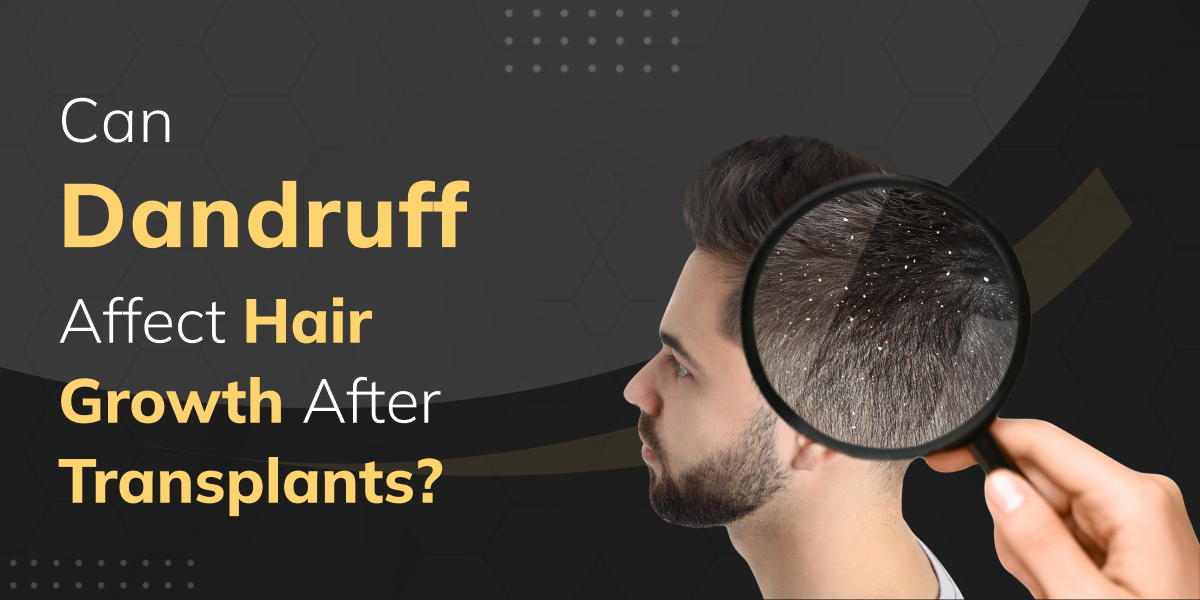


Many patients observe bright, white flakes frequently swept off their necks and shoulders after a hair transplant surgery. These white flakes can be dandruff. Many people develop dandruff after a hair transplant in India or elsewhere, and it may lead to embarrassment, discomfort, and confusion. They also fear that dandruff can affect the growth of their transplanted hair.
According to an NCBI report, dandruff affects nearly 50% of the general adult population across the world. It is more prevalent in males compared to females. Before undergoing a hair transplant session, you should know the factors that can affect your results. You should take all the precautions necessary to ensure the success of the hair transplant procedure.
What Causes Dandruff After a Hair Transplant?
Dandruff following a hair transplant surgery is common. The graft harvesting procedure creates micro-wounds on the scalp. After the surgery, these micro-wounds take time to heal, and they can make the scalp dry, leading to dandruff. Improper washing can also make your scalp oily and cause dandruff. Try to keep your scalp moist; don’t let it be too dry or oily. Discuss it with your hair transplant surgeon and follow all post-transplant instructions accordingly.
Can Dandruff Affect Your Transplanted Hair Growth?
Dandruff is a common scalp issue and is expected after a hair transplant surgery in India. During the hair transplant procedure, doctors create micro-wounds on the patient’s scalp to remove hair follicles and transplant them. It is essential to remove dead skin cells after the procedure for faster healing. Doctors also prescribe minoxidil to speed up the healing process. Many patients experience sudden increases in dandruff once they start using medications like minoxidil. The medication can irritate the scalp and cause excessive dandruff. However, medications like minoxidil prescribed by an expert hair transplant doctor won’t hamper the growth of transplanted hair. Follow your doctor’s instructions accordingly to avoid side effects and ensure the success of the procedure.
Dandruff has become a concern for many, but it does not affect hair growth after a hair loss treatment. According to hair restoration doctors, shock shedding, dandruff, and temporary hair loss are common symptoms after a hair transplant surgery. However, if you experience acute dandruff four to six weeks after the procedure, consult with your hair transplant surgeon.
How Can You Combat Dandruff After a Hair Transplant?
Don’t panic if you see dandruff on the scalp a few days after the hair transplantation. You need to wait 48 hours after the procedure to wash your head. You have to be extremely gentle while washing your head. You should use only your fingertips, not your nails, to gently massage your scalp. You should not scrub the scalp harshly; otherwise, it can dislodge a hair graft.
- For the first five days after the procedure, you have to be extremely gentle while washing your hair. Protect your recipient site, and don’t let fast-flowing water directly hit your scalp. You should not wash your scalp directly under the shower with high water pressure. For head washing, the ‘pour’ method is recommended—simply take a cup of water and gently pour it over your head.
- If you notice dandruff on your scalp, don’t scratch it or remove it. You should resist touching the scalp or grafts. Frequently touching the scalp can damage or break the implanted grafts, leading to a failed hair transplant surgery.
- If your hair transplant surgeon approves, wash your head in lukewarm water using a prescribed shampoo. You should strictly avoid using traditional anti-dandruff shampoos to avoid side effects.
- If you are worried about scab formation, report it to your doctor. When a scab forms, it feels itchy and uncomfortable. Your doctor may prescribe medicines that reduce itching, keep the scalp moist, and prevent infections.
Can Dandruff Go Away on Its Own?
It is challenging to ensure that the dandruff that appears after hair transplants will disappear in no time or on its own. At this point, you should be careful about your diet. The right diet and supplements can help reduce dandruff. Eating vegetables, fruits, seafood, eggs, nuts, yogurt, olive oil, etc. can help reduce dandruff. Also, taking iron and zinc supplements can improve your overall health and treat dandruff after hair transplantation.
Is hair Transplantation Possible on a Scalp with Dandruff?
Dandruff is a serious concern, and it needs to be treated accordingly. However, it does not affect hair growth after hair transplantation. People who already have dandruff caused by seborrheic dermatitis are not eligible for hair transplants. Consult with an expert hair restoration doctor or a dermatologist to treat the dandruff first.
Which Clinic Is the Best for Hair Transplants & Why?
In order to get successful results and prevent side effects, it is important to choose the best clinic. If you are looking for the best place for a hair transplant in India, Saraswat Hospital can be the solution you are looking for.
-
Internationally-Certified Doctors
At Saraswat Hospital, you can consult with Dr. Satya Saraswat and Dr. Preeti Saraswat. They have been in the hair restoration field for more than 19 years and have successfully performed more than 13,000 plastic and cosmetic surgeries. Both doctors are diplomates of the American Board of Hair Restoration Surgeons (ABHRS) and members of the International Society of Hair Restoration Surgeons (ISHRS). Dr. Satya Saraswat is also a Gold Medalist Plastic surgeon and a member of the Association of Hair Restoration Surgeons of India (AHRS).
Many people across the globe come to Saraswat Hospital to get advanced hair restoration treatment. Even top Indian celebrities come to Saraswat Hospital for successful hair transplants. Over the years, these eminent doctors have transformed the lives of many people.
-
State-of-the-art Technologies
For the entire hair transplantation process, including the trichoscopy analysis and graft harvest, doctors use state-of-the-art tools and technologies. Using advanced technologies, doctors can ensure a comfortable hair transplant experience and the success of the procedure.
-
Virtually Painless Experience
In both hair transplant procedures (FUT and FUE), our doctors administer local anesthesia to keep the procedure painless for the patients. Also, doctors prescribe post-operative pain management medication to lower after-surgery discomfort and speed up recovery.
-
Maximum Viability of Grafts
Due to advanced skills, expertise, experience, and the use of next-gen technologies, doctors can ensure a great graft viability rate for patients at Saraswat Hospital. Doctors and their teams always adhere to international guidelines to perform the procedure and ensure success.
-
Natural-looking Results
During the procedure, doctors ensure full control of the depth, direction, and angle of the placement of follicles to achieve natural-looking results. If done correctly, new hair will blend in with surrounding hair, ensuring the appearance of a head full of natural-looking hair. Before undergoing the procedure, ask your doctor all the important questions related to a hair transplant and then make an informed decision.
Conclusion
A hair transplant is a technique-sensitive procedure and should be done by experts only. For a successful hair transplant in India, you can visit Saraswat Hospital. Consult with expert doctors and check your eligibility for this procedure. You may need to go through some medical tests to proceed to the next step. Before the procedure, the doctor will inform you of the approximate number of grafts, the hair transplant technique, cost, etc. to let you make an informed decision. Following all pre- and post-procedure instructions provided by the doctor is crucial to preventing issues like dandruff and ensuring the success of the procedure.


