

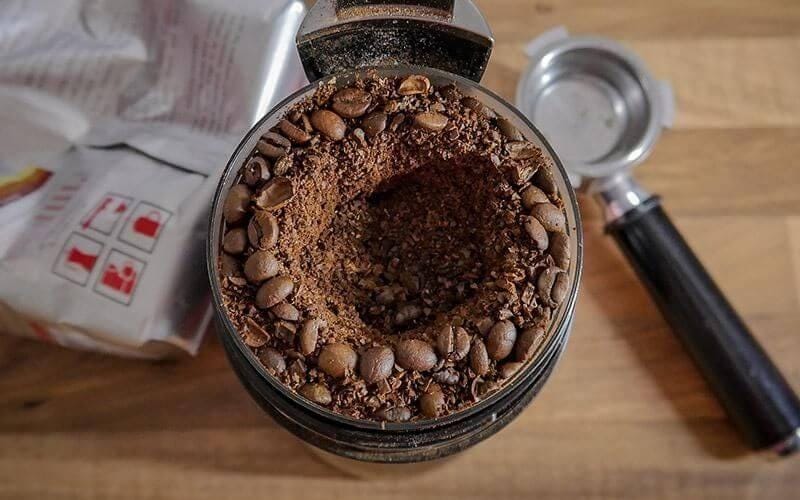

If you’re a coffee lover like me, you might be wondering if you can skip the fancy barista gear and use a regular ol’ food processor to grind coffee beans instead. I was curious too, so I did some experimenting to see if my trusty Cuisinart food processor was up for the job of making fresh grounds. Let me tell you what I discovered!
First off, the short answer is yes – you absolutely can use a food processor to grind coffee beans. It takes a little bit more effort and may not produce quite as consistent of grounds as a dedicated burr coffee grinder, but in a pinch it’ll get the job done. The blades in your food processor are designed for chopping, pureeing, and grinding all sorts of things, so coffee beans are no match for ’em.
I tested out a couple different techniques and batch sizes to see what worked best. Here’s the scoop on what I learned:
Small Batches Work Best
I found that doing 1/4 cup of whole beans at a time led to the most even grind in my food processor. Anything bigger, and the grounds ended up too inconsistent. The smaller amount lets the beans get tossed around properly by the blades. But this does mean you’ll have to work in batches for anything over a couple cups of coffee.
Use Short Bursts of Power
I pulsed the coffee beans in short 5-10 second bursts to grind them, checking frequently. If I let it go too long, overprocessing led to an uneven mix of fine powder and chunks instead of the nice medium grounds you want. Frequent pulsing avoids overgrinding.
A Fine Grind Is Tougher
Food processors can handle a coarse or medium grind decently enough. But I had a harder time getting a super fine espresso-like texture. The inconsistent particle sizes led to some grounds being too fine and others still too coarse. So I’d stick to a medium grind for drip or pour over coffee.
Clean it Thoroughly Afterward
Coffee beans are oily little buggers. The grounds left oily residue on the inside of my food processor bowl and lid. So be sure to clean it thoroughly after grinding to avoid any rancid coffee smell lingering.
Should You Use a Food Processor to Grind Coffee?
Okay, so a food processor can grind coffee beans in a pinch. But should you regularly use it instead of a real coffee grinder? I’d say only if you absolutely need to in limited situations. For everyday coffee grinding, a burr grinder is still worth the investment for a few reasons:
- More precise and consistent grind sizes, especially for fine espresso grinds.
- Specialized low-speed grinding to prevent overheating beans.
- Grind adjustability from fine to coarse.
- Larger batch capability.
- No need to grind in tiny batches.
- Specially designed to prevent clogging.
- Easy dispensing into portafilter baskets.
- Cleaner look without oily bean residue.
Final Thoughts!
So while your trusty food processor can grind coffee beans if needed, a dedicated coffee grinding machine is going to be way more efficient and give better results in the long run. But it’s nice to know you have a backup option in a pinch!
Have any of you ever tried grinding coffee beans in a food processor or other janky DIY way? I’d love to hear how it went! Let me know in the comments. And if you do give this method a whirl, be sure to use short pulses for the best results. Enjoy your fresh home-ground morning brew!
Worn out by all the research involved in finding the best kitchen gadgets and small appliances? Kitchen Deals 4U has you covered. Unbiased reviews, smart hacks, and endless recipe inspo. Your kitchen upgrade starts here.
