





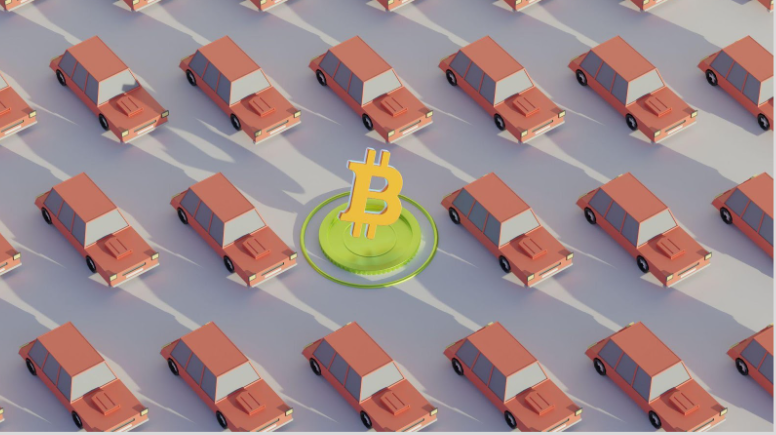


Bitcoin halving has been, and still is, one of the major events in the history of block chain. Just to give a brief, Bitcoin halving takes place when the supply and mining rewards are reduced to half every few years. As of 2022, 6.25 bitcoins are allocated as rewards for mining each block successfully.
Before we learn in detail what bitcoin mining is, the history behind it, and the future ahead, let us know a couple of things real quick. The next bitcoin halving will happen in 2024, with mining rewards going to 3.125 and supply going half. Over time, as the bitcoin supply approaches zero due to halving, it will diminish the mining rewards as well.
Understanding the working of Bitcoin Block chain
It all begins from Bitcoin! So, let us first understand how the block chain network operates. Bitcoin block chain comprises multiple nodes or computers running Bitcoin software, and containing full or partial history of transactions on the network.
Each and every such node, containing the complete history of Bitcoin mining transactions, is responsible to approve or reject ongoing transactions. There is a series of checks followed by these nodes to accept or disapprove a transaction. The validation criteria include parameters like checking the random numbers or nonce in the transaction and checking whether the length of the transaction string is correct or not.
Each transactional block is approved by the individual node and appended right to the current block chain. Once done, it is broadcasted to other nodes for updating the information. As more and more nodes get connected to the block chain, it only strengthens the security and stability of transactions.
There are more than 15000 nodes currently running the code on the Bitcoin block chain. Literally, any individual can become a Bitcoin miner. As long as the bitcoin miner suffices hardware requirements that have enough storage space to download the complete block chain with all the historical transactions, Bitcoin mining won’t be a problem at all.
Bruce Fenton, the CEO of Chainstone Labs, “One of the most important features of Bitcoin is its limited supply and issuance mechanism.” He further adds, “Bitcoin provides certainty in an uncertain world. The code, not people, decide how it is issued.”
Bitcoin Mining Basics in a Nutshell
As per Coin Routes, “Bitcoin has an inflation rate of less than 2%, which will decrease with further halvings. The trading platform further adds, “That’s looking pretty good compared with the 9.1% annualized inflation rate in the June consumer price index (CPI).”
There is this Proof of Work (PoW) consensus algorithm used in Bitcoin, wherein Bitcoin miners are rewarded based on the proven worth of efforts they have put into mining Bitcoin. The efforts do take into account not just the energy and time invested by computer hardware to solve mathematical equations, but even how complex they are. Also, Bitcoin mining requires ASIC machines for getting the calculations done. Hence, it is advisable to buy the Asic miners from a reliable Asic Miner Seller. Bitcoin mining in simple terms means, solving mathematical problems and validating the transaction legitimacy.
Once validated, the transactions are added to a block, forming a chain of block of transactions with more and more transactions added, leading to a block chain. Once a block is totally filled with transactions, a miner is rewarded with Bitcoins for doing the job of processing and confirming that block. El Salvador became the world’s first country ever to declare Bitcoin as an official legal tender back on June 9, 2021; in addition to the US dollar still being the official currency.
Defining “Bitcoin Halving”
Bitcoin halving takes place once 2,10,000 blocks are mined, which takes around 4 years to mine. The rewards are cut into half during this event as new Bitcoins are released to the circulation. This way an artificial inflation scenario is created, wherein the number of Bitcoins in mining supply decreases, in spite of the actual circulating supply increasing with new Bitcoins available for circulation, and yet rising the price of Bitcoin abruptly.
The event is expected to go on until 2140 when all 21 million Bitcoins would finally be in circulation. Once all the Bitcoins are out, all the miners would still be rewarded for processing transactions with network fees from users. This way Bitcoin miners would be motivated all way long to still mine and keep the network going.
The reason why halving events are important, is due to the fact Bitcoin moves one step towards finite supply with the rate of Bitcoin production seeing a drop at every event. Out of 21 million coins, 19.1 million are meant for circulation, and the remaining 1.9 million as mining rewards. When bitcoin came into existence in 2009, 50 bitcoins were awarded for mining, which gradually reduced to 25, 12.5, and 6.25 after 1st, 2nd, and 3rd halving.
‘History’ Of Bitcoin Halving
Bitcoin halving decreases the rate at which new Bitcoins are created resulting in reduced supply of Bitcoins available for mining and thus escalating the demand and value of Bitcoin in the process. The first event of Bitcoin halving took place on November 28, 2012 leading to Bitcoin price skyrocketing from $12 to $1207 within 1 year. The second event of Bitcoin halving took place on July 9, 2016 leading to Bitcoin price skyrocketing from $647 to $18,972 within 1 year.
The third and the most recent event of Bitcoin halving took place on May 11, 2020 leading to Bitcoin price skyrocketing from $8821 to $63,233 within 1 year. The next bitcoin halving will take place somewhere in 2024. Over time, bitcoin supply approaches zero due to each halving with the entire bitcoin supply available by 2140.
Impact Of Bitcoin Halving
The theoretical reasoning behind Bitcoin mining is – rewards reduced to half, leading to lowered supply of bitcoin availability, leading to higher demand and in turn high price. During this entire process, miners still get their incentives, irrespective of smaller amounts with every halving, as Bitcoin gets more valuable. The only way miners won’t be rewarded is, if during each halving process, there is no rise in Bitcoin price.
Imagine, what if Bitcoin is not rising in value, and at the same time the mining rewards are reduced to half? How to keep the miners motivated to do the mining job? To prevent this, the difficulty of solving mathematical equations is lowered, which enables miners to solve the transactions quicker using less efforts, in spite of rewards remaining the same.
Other than that, bitcoin halving does leave an emotional impact, allowing the “fear of missing out (FOMO)” scenario to step in. This builds immense volatility, hype, and speculation in the minds of people, letting Bitcoin to rise exponentially. Among all these, the third Bitcoin halving took place during ‘COVID’ pandemic, heightening the attention of not just financial institutions, but even individual investors getting interested investing into Bitcoin, as celebrities start backing it.
The recent statistics denote 7.65 minutes as the average time to mine a new block of Bitcoin much faster than the proposed time of 10 minutes.
Why Halving Takes Place At A Few Years Interval?
As we just discussed, such a dramatic decline in proposed average mining time could possibly result in bitcoin halving taking place much earlier, which is in December of 2023.
The mining algorithm within Bitcoin is set at finding out a block every 10 minutes. However, as more and more miners get connected to the network, it results in increased hashing power, leading to the time getting decreased in finding the block. The whole thing resets to 10-minute duration every fortnight by increasing the mining difficulty, but due to consistent popularity over a decade, an average time for finding a block has remained below at 9.5 minutes. It is very important to buy the miners from the best crypto mining hardware shop, so the mining can be done efficiently at your ease.
What Would Happen When No More Bitcoins Can Be Mined?
The year 2140 would be the one when the last batch of Bitcoins will be mined during the last halving with all 21 million bitcoins in circulation. In spite of no more Bitcoin halving events to follow, the miners would still be incentivized through the network transaction fees for confirming and processing the transactions. The greater the popularity of Bitcoin clubbed with increased network transaction fees at that time, will help miners to be incentivized with a lucrative amount, since the transaction value and Bitcoin price would be a lot higher by then.
Concluding Thoughts
Bitcoin halving plays an instrumental role in synthetically inflating the price of Bitcoin and simultaneously raising the awareness of Bitcoin among financial institutions, influencers, and Governments to a large extent. Since the process takes place every four years like a leap year, it did allow Bitcoin to enjoy an ongoing popularity among global investors. The price appreciation after each event is only going to continue, as more and more miners get associated with the network, due to the proposed rewarding structure, even after everything ends in 2140.


