

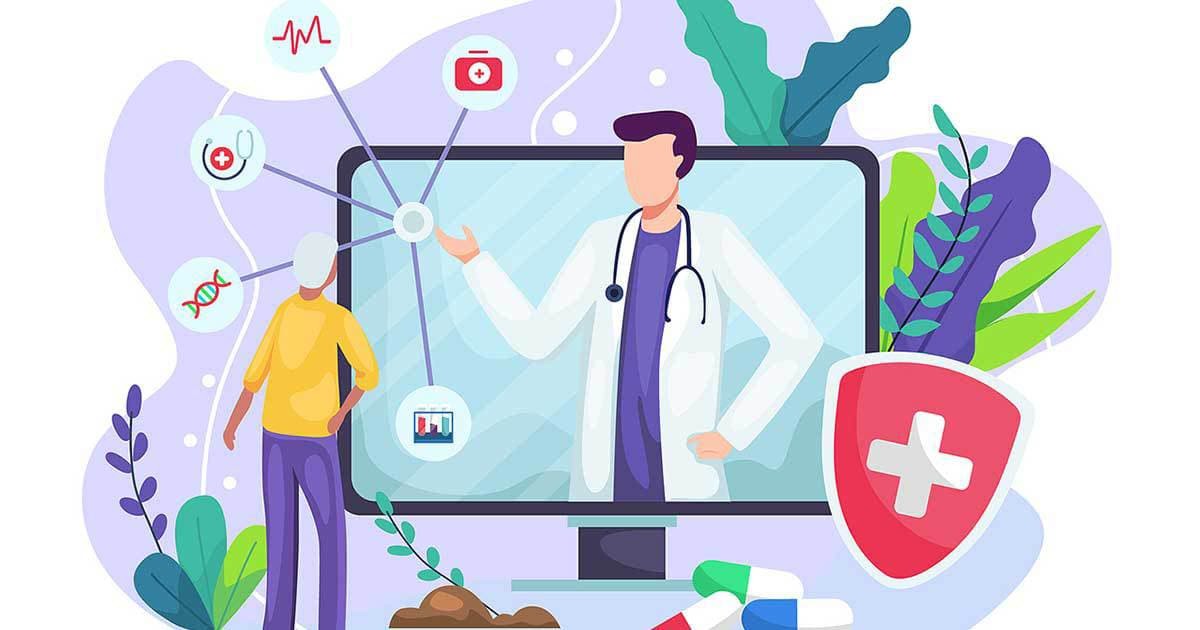

The Ayushman Bharat Digital Mission (ABDM) is an Indian government effort that aims to build a digital infrastructure for healthcare delivery. The mission is part of the wider Ayushman Bharat scheme, which seeks to provide 500 million Indians with medical coverage.
The ABDM intends to establish a digital health ecosystem in India, complete with a variety of digital tools and services. The ABDM health ID is a unique identifying number provided to each Indian resident. The individual’s medical data will be connected to the health ID. This makes it easier for doctors and healthcare professionals to access their medical histories.
ABDM may improve disease detection and management. It connects all Indian healthcare institutions and providers to a digital health ecosystem. This can also help make it possible to track epidemics more effectively and aid in the creation of focused medicines.
What is the ABDM health Identification Card?
It is designed to be an all-in-one resource for healthcare. Citizens can view their medical records from anywhere in the nation. It is now simpler for them to retain their health information and get quick medical attention.
The individual’s Aadhaar number or other identifying papers are connected to the Health ID. It assures the accuracy and security of their health information.
Furthermore, the Health ID enables people to arrange appointments and check medications digitally. This makes healthcare more accessible and convenient. The ABDM Health ID is part of the National Digital Health Mission (NDHM), which seeks to make healthcare more accessible and affordable to all Indians.
The ABDM Health ID is available via a mobile application and a website. It may be used to monitor and update health information and track medical appointments. The health ID may also be used to make appointments with healthcare providers and admission consultation services.
Here are the steps to create an ABDM health ID card:
The method of creating an ABDM Health ID is easy and uncomplicated and entails signing up on the NDHM website.
1- Visit the administration site:
The most important phase in making an ABDM health ID is to go to the National Digital Health Mission’s official site, which is www.ndhm.gov.in.
2- Click on the Register page:
Now you need to press the “Register” button. Enter your authentic demographics, like your name, date of birth, and cell phone number. You will be sent an OTP to your enrolled cell phone number. You should enter the OTP to finish the enrolment cycle.
3- Select a username and password:
After completing the registration procedure, you may access your account by entering your registered mobile number and the OTP. You will be requested to create an ABDM Health ID username and password.
Make a username and pass key that you can recall. Make sure you have access to a device that can connect to the web in order to view your ABDM health ID.
4- Give your health details:
After you’ve set up your username and pass keyword, you’ll be approached to give your health data. This incorporates your blood group, sensitivities, earlier clinical history, and current medication, in addition to other things.
It is essential to give exact data to guarantee that your medical services suppliers have an evident image of your health status. Ensure that you transfer substantial and exceptional distinguishing proof records.
5- Identification proof:
Upload a copy of your identifying papers, like your Aadhaar card, PAN card, or voter ID card. This is to affirm your character and assurance that your health ID is connected to the legitimate individual.
Try to check and make sure that you enter this data accurately. It will be utilized to recognize you and connect your health ID to your well-being records.
6- Confirm your record:
After you have entered all of the necessary data, you will get a notification to connect to your enrolled email address. After you click the connection to affirm your record, your ABDM Health ID will be enabled.
You may now download your ABDM Health ID. It can be used to view all of your health data from any location in the nation.
Importance of the Ayushman Bharat Digital Mission:
Over 1.5 lakh Health and Wellness Centres have been established across the country under the ABDM. These facilities offer primary healthcare to those living in remote areas. They are outfitted with medical equipment and staffed by healthcare specialists who provide preventive, promotional, and curative treatment. People living in locations where there were previously no healthcare facilities now have access to healthcare.
The ABDM has undertaken various skill development projects with the goal of training healthcare workers to deliver better care. This has resulted in better healthcare outcomes and an overall improvement in the quality of healthcare services in India. In this regard, the ABDM has established the Ayushman Bharat PM-JAY Skills Academy, which gives training to healthcare workers in areas including emergency care, critical care, and mother and child health.
By removing errors in the healthcare system, the ABDM seeks to lower healthcare expenses. The ABDM tries to remove the need for error-prone paper-based operations. It can automate a number of procedures, including patient registration, appointment scheduling, and medical billing.
For instance, patients in a hospital are required to complete a number of forms. Many of these are repeated by numerous healthcare organizations. Errors in patient data might result from this, and they could have a big impact on patient treatment. ABDM health ID enables improved data exchange between various healthcare providers. This digitalization of patient records and other healthcare data will improve care coordination and save costs.
Come closer to universal healthcare access
The Indian healthcare sector could transform due to the ABDM Health ID. It usually helps to lower expenses while also enhancing the accessibility and quality of healthcare services. Better disease management and monitoring are made possible by this. Millions of individuals in India might benefit from the scheme. It improves their health and gives them better access to medical services. It lessens the overall financial burden of healthcare from people’s shoulder.
