




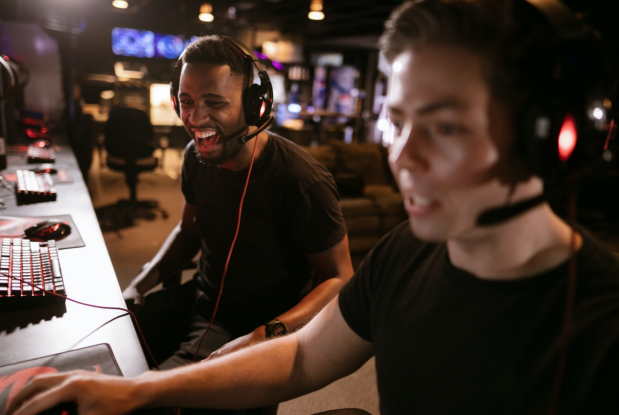


In the digital age, online gaming has become a global phenomenon for players of all ages. This type of interactive entertainment offers a variety of features that are attractive to casual and serious gamers alike: from virtual worlds, and in-game mechanics, to user communities from around the world – there’s something for everyone. However, with technology comes responsibility, and understanding its impact on society is vital if we do our part in managing our behaviors responsibly and pave the way for an environment conducive to responsible gaming.
In this blog post, we’ll break down the various positive and negative social impacts of online gaming from educational benefits to mental health concerns so you can be more aware of what these digital activities entail!
Introducing the Rise of Online Gaming
From video game prototypes in the 1950s to the first gaming console in the 1970s, the world of gaming has come a long way. But it was in the 1990s, with the rise of the internet, that online gaming truly took off. And in 2003, Steam, the game-changing digital storefront, was launched, revolutionizing how gamers purchase and assess games online. Now, accessing gaming content and sharing scores has never been easier.
Moving forward, World of Warcraft was launched in 2004 and became the first MMO to have more than 10 million active subscriptions. Three years later, online gaming began to shift towards mobile platforms. In 2009, Minecraft was released and has since become one of the best-selling video games with 176 million copies sold. Also in 2009, Apple announced the In-app Purchase feature for iPhone apps.
The use of technology has greatly impacted the evolution of online gaming. As of 2015, there were 1.5 billion gamers globally. One prominent example of this growth was the augmented reality game, Pokémon Go, which generated the highest revenue of any mobile game during its first month in 2016. Another significant game development was the release of Google’s Stadia in 2019, a cloud gaming service that eliminates the need for a physical console. While technology played a major role in the expansion of online gaming, other factors have also contributed to its rise. All of these go to show that the gaming industry is not only here to stay but expanding at a rapid pace.
Positive Social Impacts of Online Gaming
Many people are surprised to learn that online gaming, when used in moderation, can be beneficial to our lives. Here are just some of the positive social impacts of online gaming:
Enhanced Cognitive Functions
Online gaming can improve cognitive abilities by strengthening the brain’s neural circuits through focus and neurotransmitter surges. Games on https://www.ubisoft.com/ for example can enhance problem-solving, spatial skills, and coordination, all of which are important life skills. Additionally, skills gained from online gaming may be transferable and applicable in real-life situations.
Improved Pro-Social Behaviors
Playing prosocial games on platforms like https://www.stanleyparable.com/ can help improve social skills and encourage communication with other players through text or voice chat. Studies conducted in three countries and across different age groups have shown that people who play more prosocial games tend to exhibit more prosocial behavior. This means that gamers can learn how to communicate better with each other and engage in meaningful conversations.
Increase in Scholastic eSports Teams and Clubs
The past years have recorded a steady increase in the number of scholastic eSports teams and clubs. These clubs and teams provide students with an opportunity to engage in physical activity, as well as hone their critical thinking skills, learn how to strategize, collaborate with team members, and more. Additionally, these teams can also teach students valuable lessons about teamwork and sportsmanship.
Furthermore, this rise in the formation of scholastic esports teams and clubs promotes social interaction. While players mainly compete online, other team members are likely to be situated nearby, providing opportunities for in-person meetings and gaming sessions.
Negative Social Impacts of Online Gaming
At the same time, online gaming can also lead to negative impacts when used excessively or without moderation. Here are some of the most common problems associated with it:
Social Anxiety
A lot of young individuals are caught in a harmful pattern where playing video games excessively leads to social anxiety and a lack of social skills, which further prevents them from socializing healthily. Individuals who excessively play video games have a higher likelihood of having social anxiety compared to those who do not. Social anxiety and gaming disorder are typically intertwined and can have an impact on one another. It is possible to develop social anxiety before becoming addicted to video games or vice versa.
Back when Bingo halls and arcades were prevalent, social interaction with peers was necessary. To determine who had Bingo in the halls, for instance, individuals had to interact with each other, and numerous video games at arcades required multiplayer participation. Also, platforms such as https://www.winkbingo.com/ offer games that have chatrooms enabling players to interact with each other and feel a sense of membership.
The social atmosphere found at Bingo halls and arcades promotes socializing beyond just gaming, unlike online gaming which can be more solitary since it doesn’t require any physical interaction outside of the computer or console.
Relationship Problems
Gaming addiction can have severe social consequences, as it can lead to strained relationships with loved ones. Compulsively playing video games and lying about the amount of time spent gaming can lead to conflict, confrontation, and even marriage breakdowns.
Toxicity
Playing video games excessively can lead to social problems due to the toxic culture in the gaming community. People who suffer from video game addiction often face online harassment and hate. Some players try to justify toxic behavior as a typical aspect of gaming, but studies have revealed that it is contagious. Regular exposure to toxic behavior increases the chances of future bullying and mistreatment of fellow players during gaming sessions.
You Can Get the Help You Need!
With adequate supervision, online gaming can be an enjoyable pastime for people worldwide, rather than being solely negative. If you are grappling with gaming obsession and its associated repercussions, you can get assistance. Contact a mental health expert or find virtual resources like tailored support communities or forums to communicate with similar individuals who comprehend your circumstances.