

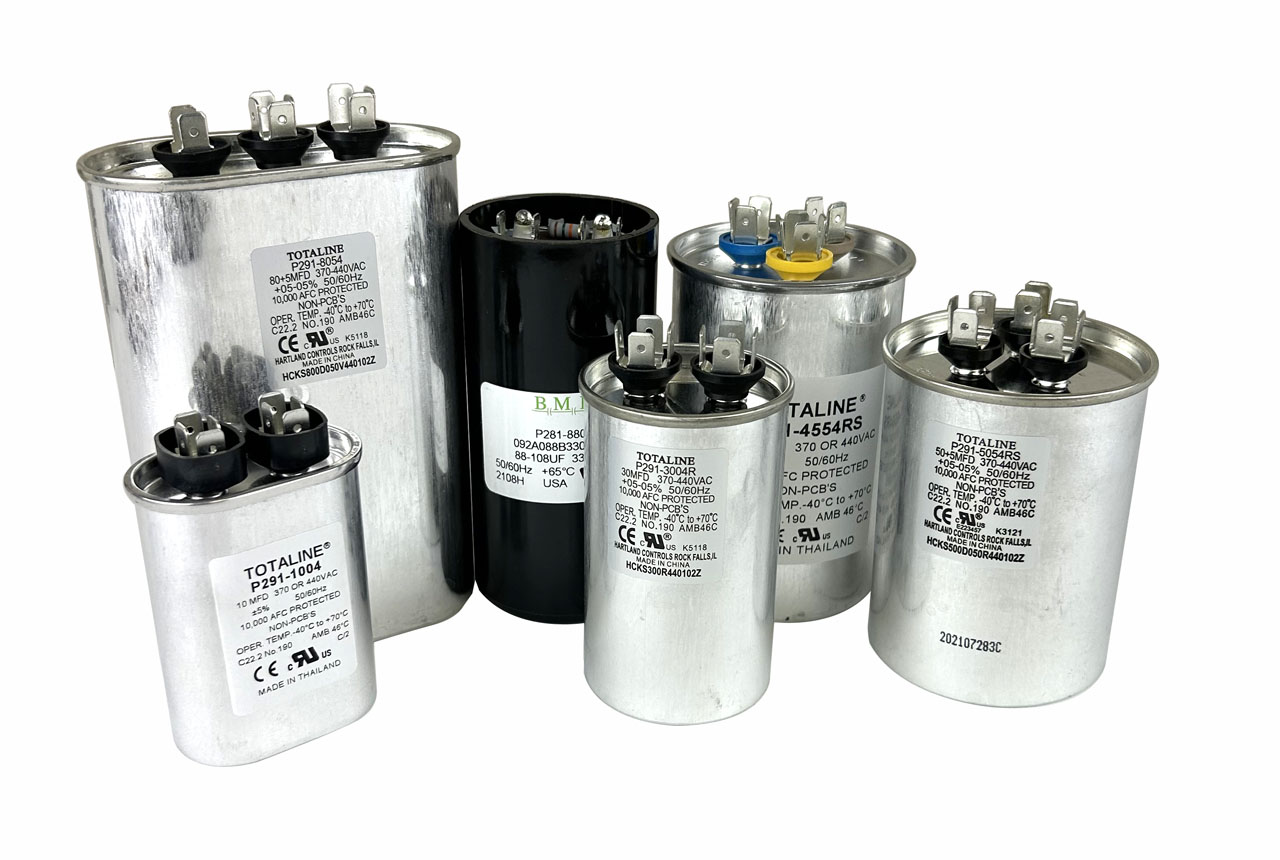

A capacitor is a low-cost component that holds the energy to get an electrical motor moving and keeps it running smoothly without heavy up-and-down spikes. They come in a variety of packages, shapes, and sizes.
Capacitors contain dangerous amounts of electricity, so homeowners should be careful when testing or replacing their AC capacitors. Before starting, make sure the power to the unit is off.
Compressor Motor
If the AC system’s compressor motor isn’t working or not running well, you likely need a capacitor to get it up and running. A capacitor helps electric motors start to turn and run smoothly with no big up-and-down spikes in voltage. These low-cost components come in many shapes, sizes, and packages. They may have a label showing the capacitor’s size in microfarads, VAC, or voltage amp current. They also have data stickers that can help you determine which type of capacitor to purchase.
If your compressor or blower fan motor isn’t starting, check the capacitor to make sure it’s not overcharged. Overcharging capacitors can damage the motor or create a dangerous spark during start-up. First, short the terminals together using a screwdriver to check a capacitor. This is extremely dangerous, but it’s necessary to discharge the capacitor so you can test it with your multimeter. Once the start and run caps are discharged, connect the leads from your multimeter to the capacitor’s terminals. Then, set your multimeter to the capacitance setting and take a reading. The reading should be shown on the multimeter’s display as either mF or MFD (megafarads or megafarads).
A hermetic Permanent Split Capacitor (PSC) motor will have a special start capacitor to boost the motor’s starting torque. It needs a lot of energy to get going, so it uses the start capacitor to store that extra power until the system is pressurized and the motor starts on its own. Then the start capacitor is disconnected from the motor, and a regular run capacitor takes over to maintain the rotating magnetic field of the motor while it runs.
A PSC motor can be used with a non-bleed TXV, but only if the compressor manufacturer specifies the right starter relay and start capacitor for the application. If you use a different-sized start capacitor, the relay will not be properly matched to the motor and will cause damage. The right starting relay will allow the start capacitor to drop out at just the correct moment as the compressor reaches full operating speed, improving the motor’s efficiency and reducing its energy consumption.
Blower Motor
The blower motor in an HVAC system pushes the hot air from a furnace throughout a home’s ducts, and it needs a capacitor to run. Like other types of capacitors, the blower motor capacitor wears down over time and may start to make a humming noise. If this happens, calling an HVAC professional for capacitor replacement and repair services is a good idea.
Capacitors are low-cost components that come in multiple packages, shapes, and sizes. They can have one or more terminals. A Start Capacitor holds a charge to help a motor get moving and then turn off, while a Run Capacitor keeps a motor running at a steady pace without big up and down spikes.
Most HVAC systems use permanent split capacitor (PSC) motors to power fans, pumps, and compressors. PSC motors require a capacitor to start up and keep running. A capacitor failure is usually the cause of a fan that won’t turn on or is making a loud humming noise.
When a capacitor fails, the fan in a house will stop spinning, and the AC won’t operate properly. This will cause the air conditioner to work harder and wear out faster, leading to higher energy bills. The good news is that replacing a capacitor is fairly easy and inexpensive, and many local HVAC contractors offer free, no-commitment project estimates.
Before you replace a capacitor, you should shut off the power to your HVAC system. Next, you must disconnect the wires connecting to the capacitor. Once the capacitor has been disconnected, you can test it for voltage and amperage by using a multimeter. When testing the capacitor, look for a sticker with the manufacturer’s information, which will include the microfarads and VAC, or voltage amp current. The dual capacitor used in the video has a leg that goes to the compressor (Labeled Herm) and another to the condensing fan motor (Labeled Fan). The new capacitor you purchase must have the same microfarads and VAC.
It is important to remember that capacitors contain dangerous amounts of electrical charge and should be handled with care. If you plan to replace a capacitor, it’s a good idea to consult an experienced technician for safety and proper installation.
Start Motor
In an AC system with a capacitor-start motor (the most common in today’s homes), the start capacitor is what gives your compressor and fan motor the initial jolt they need to get started. Once the motor starts spinning, though, it relies on the run capacitor to keep delivering energy so it can continue blowing air at your desired temperature.
Capacitors are measured in two things: voltage and microfarads (mF). The higher the volts, the faster electrical current will move through them; the lower the mF, the less electricity they can hold. Capacitors are usually cylinder-shaped and sleek in appearance. However, if they’re not performing well, you can tell by their bulging appearance. Once a capacitor is overstuffed, it’s past its repairable life span and must be replaced.
When a start capacitor isn’t working, your air conditioner might still turn on and off as it normally would, but you’ll hear a humming sound coming from the blower motor. This is because the electrical energy that would normally go toward powering the motor instead goes to making that annoying humming noise.
If you suspect your start capacitor is bad, shut off your air conditioner’s power and locate the capacitor. Be sure to discharge the capacitor by shorting its terminals with a screwdriver, as my article on How to Diagnose a Bad Capacitor describes. Once you’ve done this, connect your multimeter’s leads to the capacitor’s terminals. If it’s a dual-run capacitor, its leads are labeled C to Herm and FAN. Then set your multimeter to the capacitance setting and read the MFD (or uf) rating. This one reads 55+5 MFD (uf), so it’s a dual capacitor that is good for your compressor and fan.
When you’re ready to replace the old capacitor, be sure to use a high-quality replacement from a reputable manufacturer that offers a warranty. Also, remember to take a picture of your old capacitor or write down the wire coloring and connections so you can match them to your new one when you’re connecting it up. If you don’t do this, you may end up with a capacitor that has the wrong voltage or MFD.
Run Motor
A run capacitor helps an AC motor keep its rotational speed consistent. It stores electrical energy and releases it slowly, making it more efficient than a motor that uses a direct current to generate its power. Capacitors store electric charge in two metal plates that are separated by an insulator, such as mica, porcelain, ceramic, Mylar, Teflon, or glass. The capacitor’s energy is measured in microfarads (uf).
Unlike the start capacitor, designed to deliver a large charge over a short period, run capacitors hold moderate amounts of charge and remain in an electrical circuit until they are needed again. This makes them a better choice for continuous use, such as in permanent split capacitor (PSC) motors used in direct drive furnace fans and hermetic compressors.
When a run capacitor needs to be replaced, it can be tested by touching the leads to a multi-meter set on Farads. If the capacitor reads 55+5 MFD (uf) 440 VAC, it is good for the compressor and fan motor.
It is also possible to test a single-use run capacitor by putting one end of the leads on C and the other on Herm, as shown in the picture below. When the leads are touching, a normal capacitor will read 4.7 MFD (uf), but if it reads 4.5 MFD or less, it is bad and needs replacing.
While the exact price for replacing an HVAC capacitor can vary, it typically costs about $170. However, several factors can affect the cost, including unit type, location, and labor rates.
Homeowners can reduce the cost of replacing a capacitor by looking for deals, rebates, and sales at local hardware stores or online. Also, they should find a trusted HVAC pro and have them replace the capacitor as soon as it shows signs of needing replacement.
By understanding how a capacitor works and the differences between a start and run capacitor, homeowners can identify when one of these important components is beginning to fail. This will help keep the system safe, avoid expensive repairs, and save on energy bills.
