

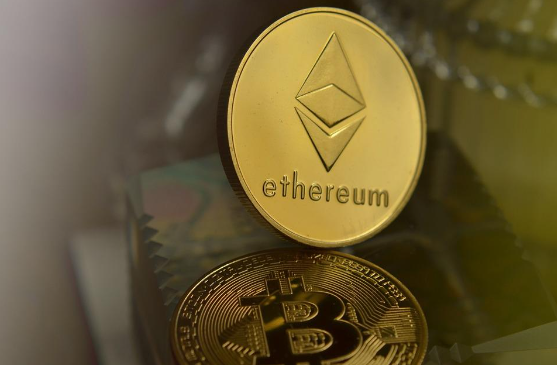

Ethereum and Bitcoin are two of the most powerful cryptocurrencies out there. Ethereum’s white paper was inspired by Bitcoin, which is why they have so many similarities. However, Ethereum expanded towards other products and services, such as smart contracts, DApps and DAOs. These unique blockchain technologies help developers and enthusiasts create their own ecosystem while being a part of a well-developed network.
But why are there so many cryptocurrencies and digital coins if Bitcoin is an excellent store of value? Considering the timid beginning of crypto in the financial industry since 2009, users realized that Bitcoin holds considerable value, but blockchain technology could be used for something more. That’s why Bitcoin inspired Ethereum, but its creator, Vitalik Buterin, had a clear vision of what the ledger could provide.
Bitcoin is still leading the market, but speculations revealed that Ethereum might overtake it and become the most famous and efficient digital solution online.
How is that possible?
Bitcoin: an inspiration for many, but with a turbulent history
Bitcoin is the first cryptocurrency ever created, intended to be used as a store of value. With it, people could transact worldwide and store their digital tokens in a specific wallet. What’s special about this technology is that it doesn’t need the involvement of a third party to successfully perform tasks, a lacking feature of the government banking system.
Bitcoin’s technology may seem complicated in the light of regular financial systems. It leverages great utilities but has some risks that few could understand, which is why many people lost considerable investments because they were unaware of the dangers of investing. Bitcoin is a highly volatile cryptocurrency, so its value can change drastically depending on media coverage and supply and demand. This problem persists today and has put many investors in challenging situations.
Another issue with Bitcoin is that it becomes harder to mine every year. At some point, it will reach the maximum coin supply, and until that, mining will increase in difficulty and use more computational power than now. Bitcoin also poses a risk to the environment as mining even one coin requires a lot of energy, which is against sustainability practices.
Ethereum: better blockchain, but with scalability concerns
Ethereum was released in 2015, only a few years after Bitcoin. With similar features regarding a publicly displayed distributed ledger and being traded on cryptocurrency exchanges, we can say that these cryptocurrencies are the same. But Ethereum can do more than that.
Ethereum’s most impressive feature is the smart contract, a system through which developers can program almost anything they want without being limited by certain factors. With the help of smart contracts, people can create DApps applications built on the blockchain. At the same time, the Ethereum blockchain promoted the formation of DAOs (decentralized autonomous organizations) that provide better features than regular organizations.
Instead of providing a store of value properties, Ethereum targets interactions between applications and tools. Even more impressive is that Ethereum has one of the best communities in which information is shared and appreciated by everyone interested in blockchain technology.
One issue that Ethereum is still working on is scalability. Since the networks expanded so fast and continue to do so, it’s more challenging for the nodes to secure everything. At the same time, scalability challenges limit the number of transactions per second, which are not impressive considering the network size. At the same time, since scalability is out of control, the problem of centralization persists in an ecosystem based on decentralization.
The difference between Ethereum and Bitcoin stands in the updates
While both are decentralized entities, Ethereum was always looking for improvement. We can see that multiple updates have been imposed through the years, with the latest ones reducing gas fees and the energy required for mining. Some significant aspects in which Ethereum is constantly making improvements include the following:
- Cheaper transactions, considering that prices can rise since the blockchain’s rollups are expensive and based on centralized features;
- Extra security is needed, even if Ethereum is considered one of the safest ecosystems among popular ones;
- A better user experience is needed since the official coding language is Solidity, and the interface may look a little bit messy;
- Future-proofing aims to improve gas fees, EVM features and data structures;
The latest updates (and future ones) have been categorized in the following steps:
- The merge has switched the old PoW to the more efficient PoS;
- The surge aims to achieve scalability performances through rollups and data sharding;
- The scourge targets decentralization, censorships resistance and MEV protocol risks;
- The verge will make block verifying easier;
- The purge will help reduce the computational costs of running nodes;
- The splurge will deal with other minor improvements;
However, Bitcoin has something Ethereum doesn’t
There are three reasons people would choose Bitcoin over Ethereum. First, there are differences in market capitalization, which put Bitcoin at the top. With a substantially bigger market capitalization, Bitcoin is a more established asset, accounting for around half of all the value in crypto.
The increasing scarcity is also essential, and Ethereum’s unlimited coin supply might subject it to high inflation rates. On the other hand, Bitcoin has almost reached its maximum supply; the time is estimated for the next 117 years. This is a good thing because the inflation rate will significantly decrease over time.
Finally, in terms of decentralization and security, Bitcoin is still leading. With many nodes and minders helping verify transactions, Bitcoin is the most secure and decentralized among all cryptocurrencies. Bitcoin’s network is also more established than Ethereum, which is susceptible to hacking, manipulation, and even centralization. Of course, Ethereum is constantly working on solving these issues, but until it becomes close to Bitcoin’s security and reliability, it will be solely trusted for making DApps and DAOs.
Final thoughts
Considering the aspects discussed below, we can say that Ethereum has the opportunity to outshine Bitcoin soon enough, but only after the results of all updates planned for this year. In terms of investments, however, Bitcoin might lead the market.
