


Are you ready to take your image analysis skills to the next level? Look no further than U-Net segmentation techniques. In this blog post, we’ll guide you through everything from the basics of U-Net segmentation to advanced expert-level techniques. Whether you’re a beginner or an experienced analyst looking for new tools, our comprehensive guide will help you master U-Net and revolutionize your image analysis workflow. Get ready to dive in and transform how you approach image segmentation!
Introduction to U-Net Segmentation Techniques
U-Net is a powerful segmentation technique that can be used for a wide range of image analysis tasks. In this blog article, we will give an overview of U-Net and its capabilities. If you’re looking to take your image analysis skills to the next level, u-net segmentation is a great place to start. The U-net segmentation course will teach you the basics of this powerful technique so that you can apply it to your own projects.
You’ll learn how to:
– Preprocess images for U-net segmentation
– Train a U-net model
– Apply u-net segmentation to images
By the end of this course, you’ll be able to confidently use u-net segmentation to improve your image analysis skills.
Overview of the U-Net Architecture
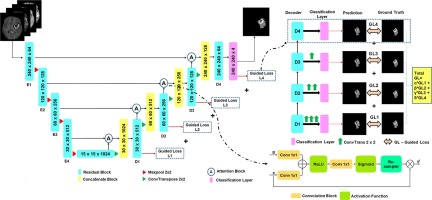
The U-Net architecture is a popular choice for image segmentation tasks, as it offers a good trade-off between accuracy and efficiency. The basic U-Net consists of a series of convolutional and max pooling layers, followed by a series of up-sampling and concatenation layers. The number of convolutional and up-sampling layers can be varied to suit the needs of the task at hand.
The main advantage of the U-Net architecture is that it can effectively learn from small training datasets. This is due to the skip connections that are used to connect the encoder and decoder parts of the network. These connections allow the network to use information from both high-level and low-level features, which is beneficial for image segmentation tasks where there is often limited training data available.
Another advantage of the U-Net architecture is its flexibility – it can be adapted to different types of tasks and datasets. For example, you can add extra layers to the network for tasks that require more precise predictions, or use different types of activation functions depending on the nature of the data.
A Step by Step Guide to Building a U-Net Model
If you’re reading this, then you’re probably interested in learning how to build a U-Net model for image segmentation. This guide will show you exactly how to do that, step by step.
First, let’s take a look at what U-Nets are and why they’re so effective for image segmentation. U-Nets are a type of convolutional neural network (CNN) that’s specifically designed for image segmentation tasks. They were first proposed in 2015 and have since become one of the most popular CNN architectures for this task.
There are two main reasons why U-Nets are so effective at image segmentation. First, they have a very powerful feature extraction capacity due to their use of deep convolutional layers. Second, they’re able to effectively utilize small training datasets due to their “skip” connections between different levels of the network.
Now that we know what U-Nets are and why they work so well, let’s get into how to build one. The first thing you need is a dataset of images that you want to segment. This can be anything from medical images to satellite images to photographs. Once you have your dataset, the next step is to preprocess it. This involves things like normalization, augmentation, and resizing.
After your dataset is preprocessed, the next step is to define your model architecture. This can be done with either a Sequential or Functional API
Advanced Techniques for Enhancing Performance
If you’re looking to take your image analysis skills to the next level, then learning advanced U-Net segmentation techniques is a great way to do it. With U-Net, you can segment images with fine detail and accuracy, making it perfect for medical and scientific applications.
In this section, we’ll cover some advanced techniques that will help you get the most out of U-Net segmentation. We’ll start by discuss ways to improve the training of your models, including data augmentation and transfer learning. Then we’ll move on to some tips for improving the performance of your models on unseen data, such as using test time augmentation. By the end of this section, you’ll be well on your way to becoming an expert in U-Net segmentation!
Use Cases of U-Net Segmentation
There are a number of different ways that U-Net segmentation can be used to improve image analysis. One common use case is to remove background noise from images. This can be especially helpful when trying to identify small objects or features in an image.
Another popular use case for U-Net segmentation is object detection. This can be used to find and isolate objects in an image, making it easier to perform further analysis on them.
U-Net segmentation can also be used for image classification. This involves training a neural network to output class labels for an input image. This can be used to automatically classify images into different categories, such as medical images or photographs.
U-Net segmentation can also be used for image regression. This is where a neural network is trained to output a continuous value, such as a depth map, for an input image. This can be used to estimate quantities from images, such as distances or sizes.
Alternatives to U-Net Segmentation
There are a number of alternative methods to U-Net segmentation that can be used for image analysis. These include:
- Mask R-CNN: This is a deep learning method that can be used for object detection and segmentation. It is based on the region-based convolutional neural network (R-CNN) framework.
- Semantic Segmentation: This is a technique that uses deep learning to semanticlabels pixels in an image.
- FCN: FCN is a fully convolutional network that can be used for semantic segmentation.
- Deeplab: Deeplab is a deep learning system for semantic image segmentation with the goal of providing high accuracy and real-time performance.
- ICNet: The ICNet system is designed for real-time semantic segmentation of images at different resolutions.
Conclusion
In conclusion, U-Net segmentation techniques provide an effective and accurate way to accurately analyze images. Through this article, we have explored the basics of U-Net segmentation as well as some expert methods that can help you take your image analysis skills to the next level. With the right knowledge and practice, anyone can become a master at image processing using these powerful techniques.
